Day 11 AZT : Part of Section 28
Hiked on September 20, 2026
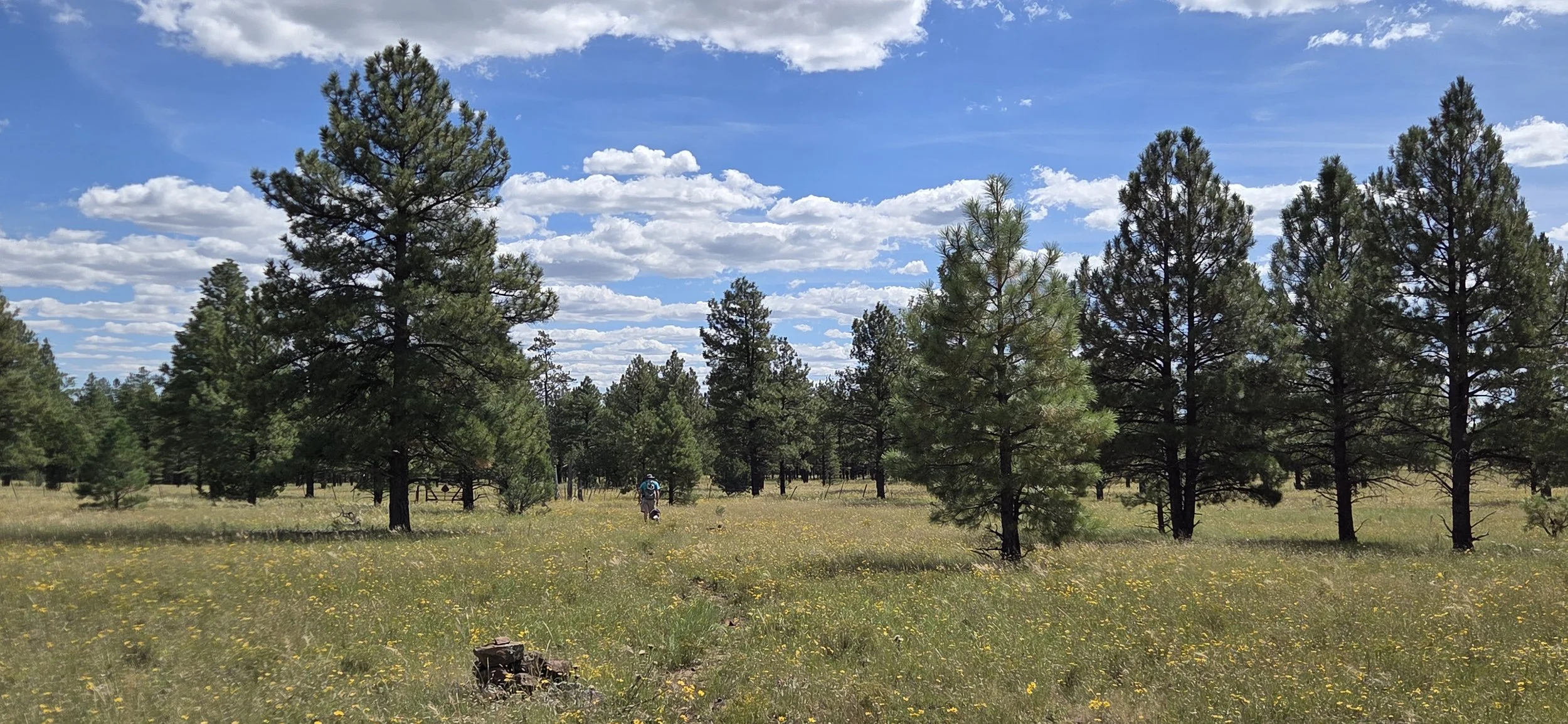
Without a shuttle driver, we did some back and forth and some repeat of the trail. If you are a statistics person, you can read the details at the bottom of the post. We began the day under pinyon, cedar and juniper trees as we walked on rocky flats with meadows filled with wildflowers—white heath aster, redroot buckwheat, fleabane, and an occasional burst of purple from the hoary tansy-aster.
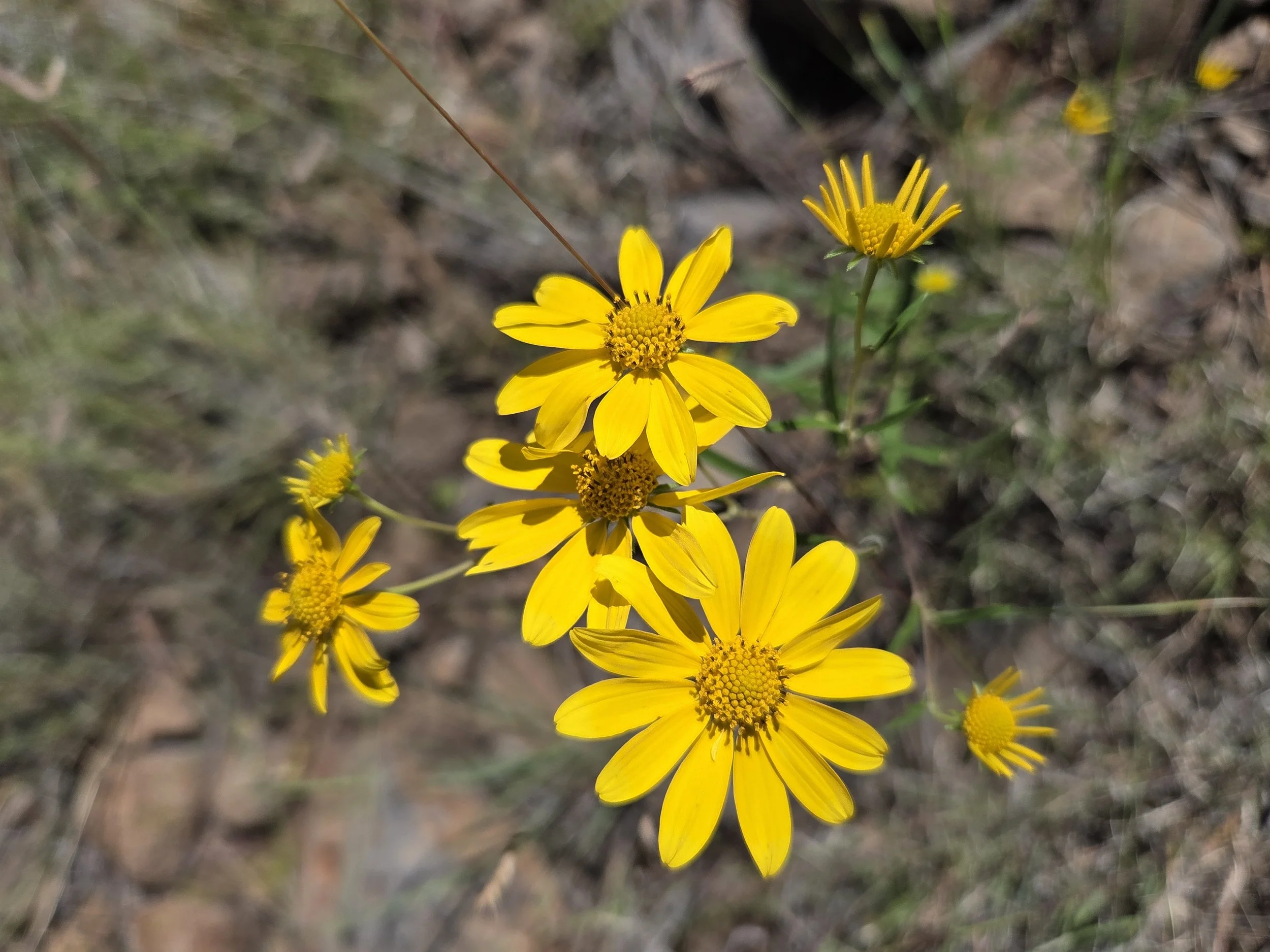
But the winning flower of the day was the showy goldeneye.
I felt like we had stepped into a French Impressionist painting. The same blue skies. The same wide open spaces. But instead of red poppies, showy goldeneyes swayed in surround-sound yellow.
Goldeneyes (Heliomeris multiflora) have adapted to grow in many different conditions. According to studies done by the Forest Service, showy goldeneyes thrive in shallow to deep soils and in areas “ranging from moist to dry with heavy clay to sandy or gravelly textures.” The stems of goldeneyes range from hairless to having straight, stiff hairs. The leaves are opposite. Or alternate. Linear or egg-shaped. The leaves measure half inch in length to 3.5 inches, while attached directly to the stem. Or not.
That Bloom Where You Are Planted directive? Goldeneyes got the memo.
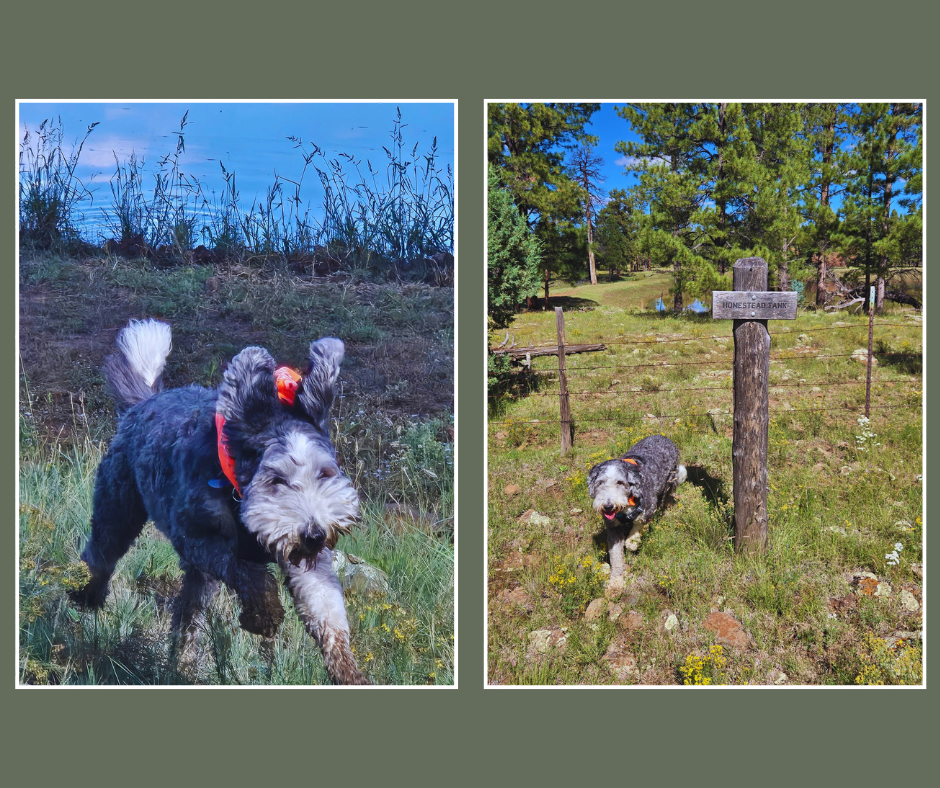
We saw goldeneyes on the open, flat areas in rocky soil. Goldeneyes in the soft mud. Goldeneyes in meadows. Under juniper trees. By the earthen stock tanks. On our lunch break. Our sheepadoodle trampled goldeneyes under her feet as she ran back and forth and back again. We may have hiked ten miles, but Sadie did at least fifteen.
Goldeneyes sprouted where we parked the car. Goldeneyes at the beginning of the hike. Goldeneyes at the terminus. Goldeneyes living up to their namesake of being showy. Abundant. As far as the eye can see.
But sometimes.
Sometimes, showy goldeneyes bloom in a forest in the shadow of ponderosa pines in an area that flowers have never grown before. And the witness knows this for a fact because he has been coming to these woods every summer since he was a boy, when his parents built a cabin in Tempe Camp outside of Mormon Lake.
At age 79, he is no longer a boy.
But he knows these woods. These trees. These flowers.
Last night our friends Jack and Laura joined us for dinner at our cabin. Four decades earlier, after moving to Arizona with a six-month old baby, Jack and Laura had our little family over for dinner. We are still sharing life around a table.
Now they are each facing a serious medical diagnosis. After sharing all the details, Jack pulled out his phone. He showed us a picture of their cabin’s backyard.
“In all the years we have been coming to the cabin, I have never seen flowers growing in this section of the forest.”
I looked at the photo. Towering trees. Massive, old-growth ponderosas. At the base of one tree—unnoticeable until I zoomed in—bloomed a pair of yellow flowers.
Two showy goldeneyes.
“I felt this was a message from God,” Jack said, “that these two flowers are me and Laura.”
And that’s all he said. Jack’s not one for long speeches. He’s more for helping us insulate the attic. Or rescuing a grandchild’s toy that got stuck in the grill of a car. Or laying the tile in our home. Or both of them helping in our kitchen so we could still throw the scheduled high school graduation party for our youngest son after my dad died a few days earlier and I could barely put two thoughts together. Or coming over to pray for me the night before a surgery.
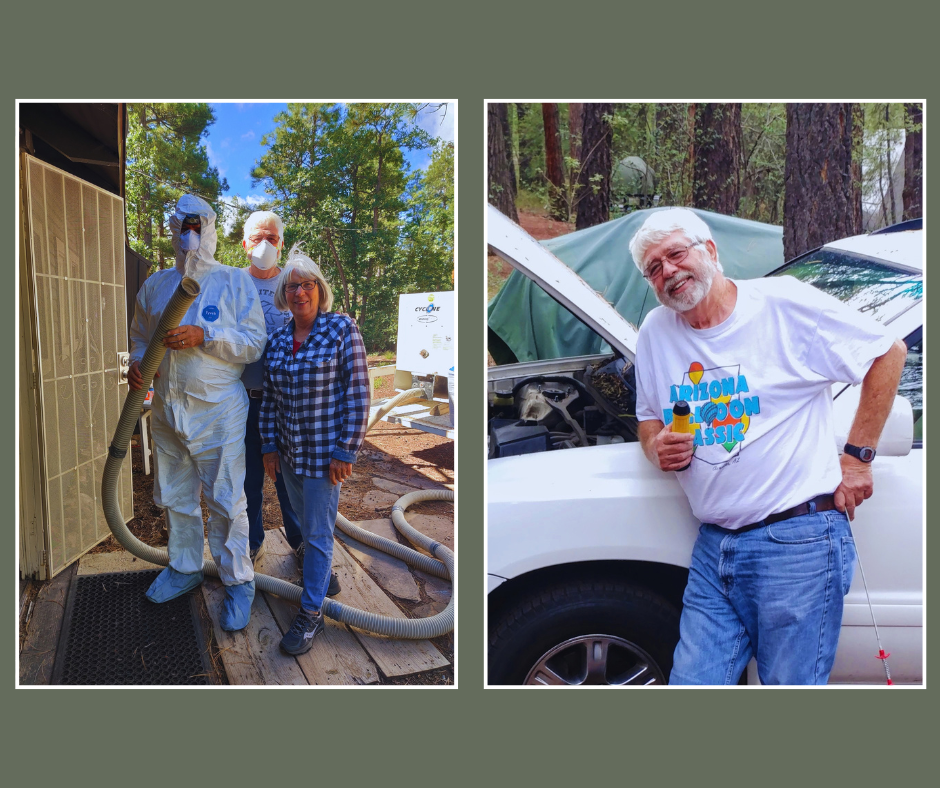
Our friends let actions do the talking.
Jack tucked away his phone. The dialog shifted to an upcoming surgery.
But I replayed the conversation during the next section of the hike, as we descended, of all places, of all possible days, into Jack’s Canyon. A flock of pinyon jays serenaded us as we crossed the dry streambed multiple times.
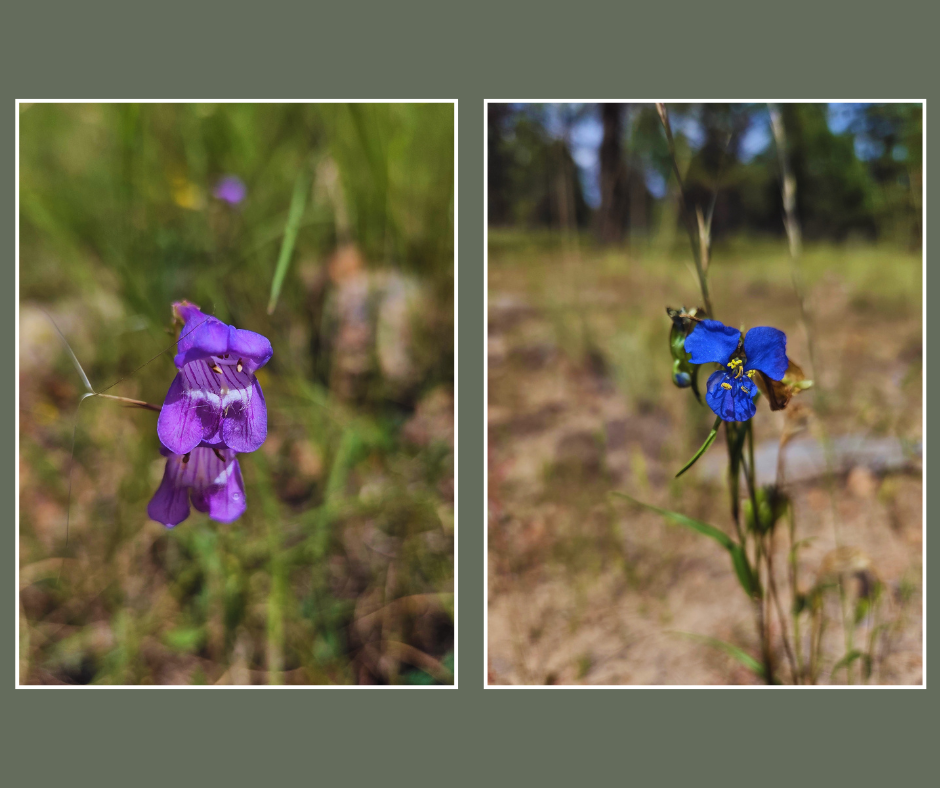
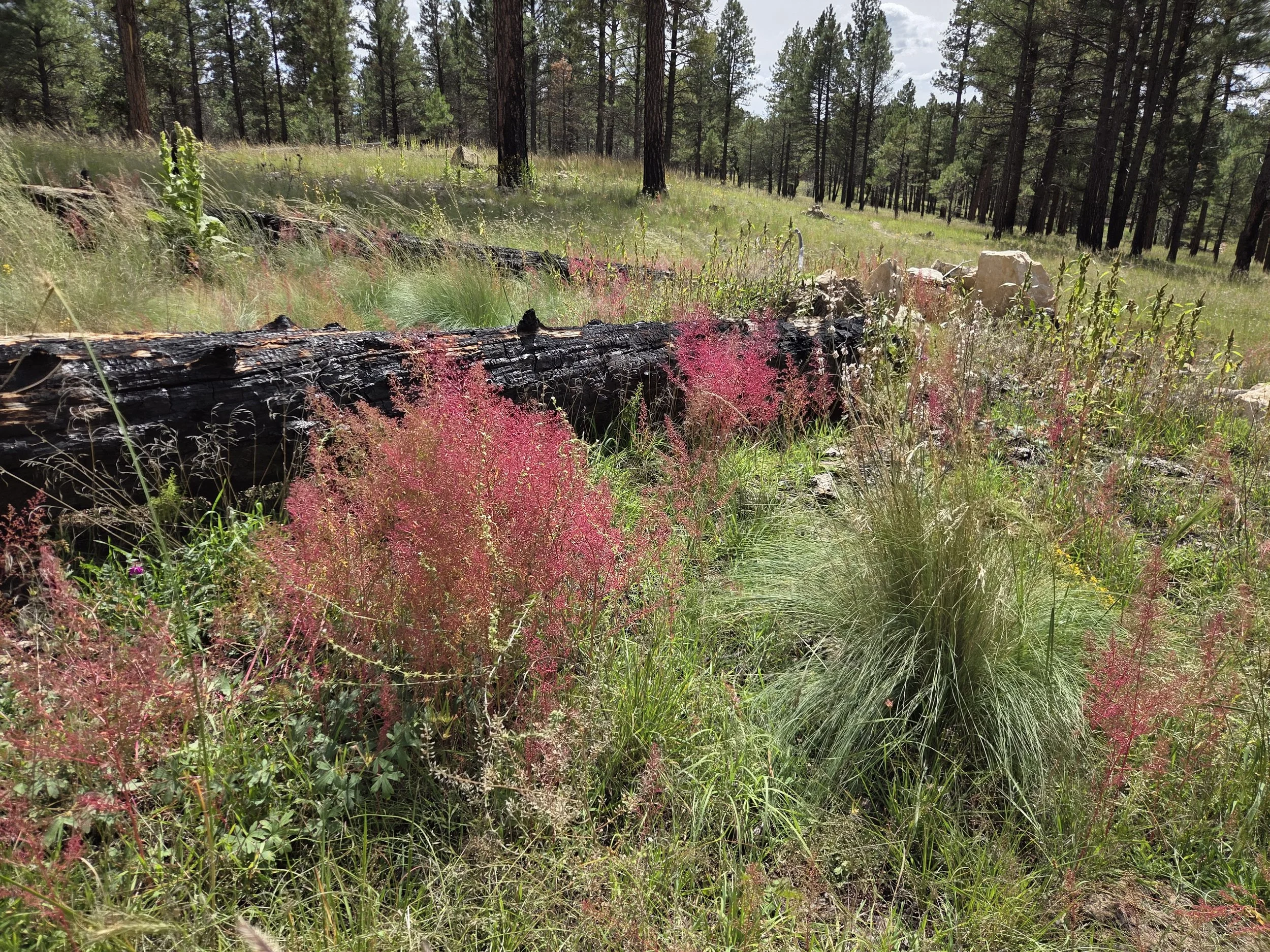
In the new biome, I documented a growing list of wildflowers—Rocky Mountain pentstemon, Kaibab Plateau penstemon, scarlet gilia, cardinal catchfly, lupine, and a new, deep blue birdbill dayflower, bringing the total to forty different flowers. The sheep’s sorrel was also noticeable -- turning red for autumn.
Hiking out of the canyon, we walked on soft and easy trails under the shade of taller pines, interspersed with open meadows of more yellow flowers. I knew that in another section of Coconino Forest, two showy goldeneyes also bloomed, although dwarfed by huge ponderosas.
And our two friends continue to bloom, even when feeling dwarfed by another serious diagnosis.
The flowers in Jack’s photo tell a heaven-sent, personal message. Our friends are seen and loved by their Father who knows them each by name.
Jack and Laura bloom—oh, how they bloom—where they are planted, often like showy goldeneyes, without words.
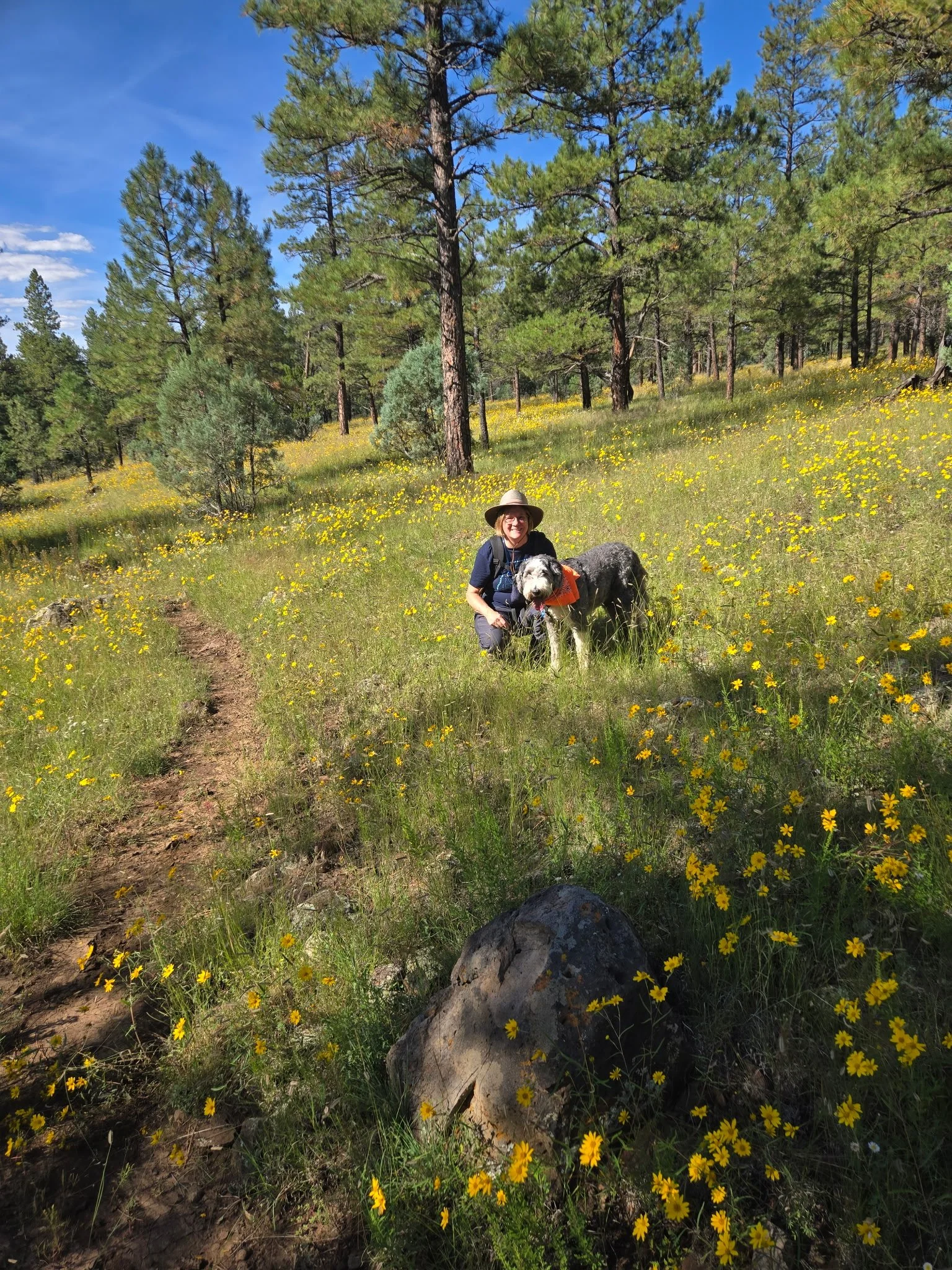
So many yellow flowers!!
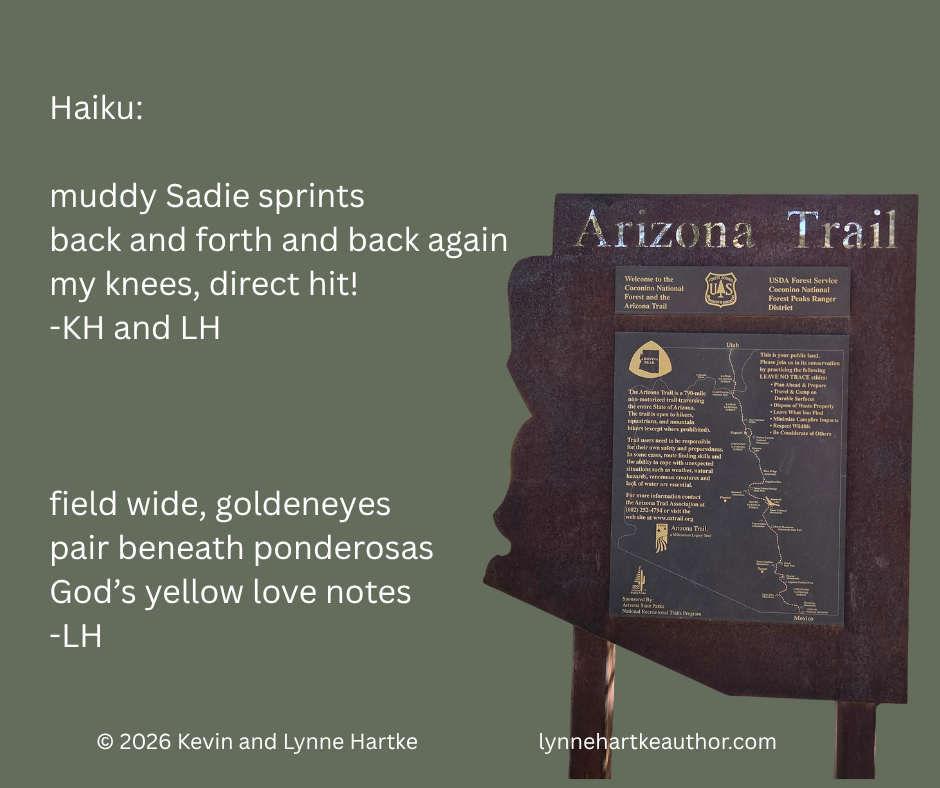
Misc Hiking Stats and Notes:
Sunday, Sept 20, 2026. 9:08 – 11:45, the first half. Second half: Began 11:45. I picked Kevin up at 2:05 pm.
Sunny. 67 degrees
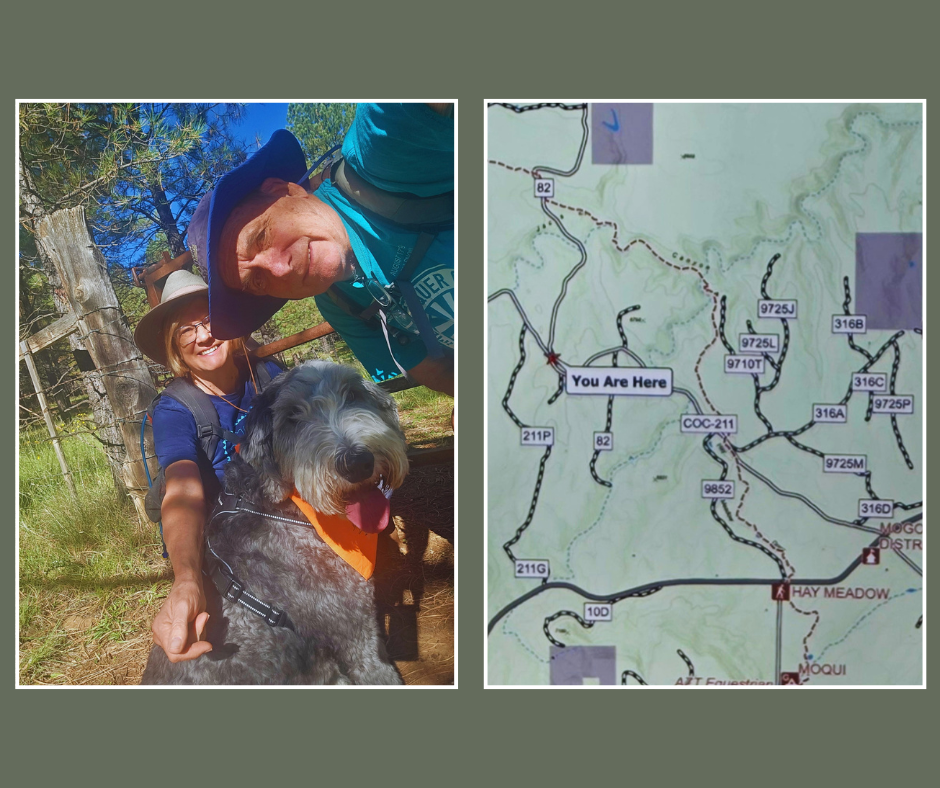
Without a shuttle driver, we drove the car to the intersection of FR 82 and the AZT, off FR 211, northeast of Clints Wells. We hiked about 3 miles on the AZT, to Homestead Tank and then hiked back to the car. Sadie and I headed SOBO for 4 miles while Kevin drove and parked the car for me to pick up at the intersection of Highway 87 and FR 138. After about 70 minutes of hiking, we passed each other on the trail with Kevin hiking NOBO. I picked him up in the car at the intersection of 82/AZT after only a five-minute wait.
About 10 miles of hiking, 7 miles on the AZT, plus 3 backtracking miles. About 23,000 steps. Sadie did at least 15 miles.
Earthen Tanks. NOBO – Waldroup tank and our turnaround point on the 82, Homestead Tank. SOBO, we passed Hay Meadow Tank, very close to the 87 and 138 terminus.
Kevin remembers hunting in the past with Jack in Jack’s Canyon. As soon as he descended, he thought, “I’ve been here before.”
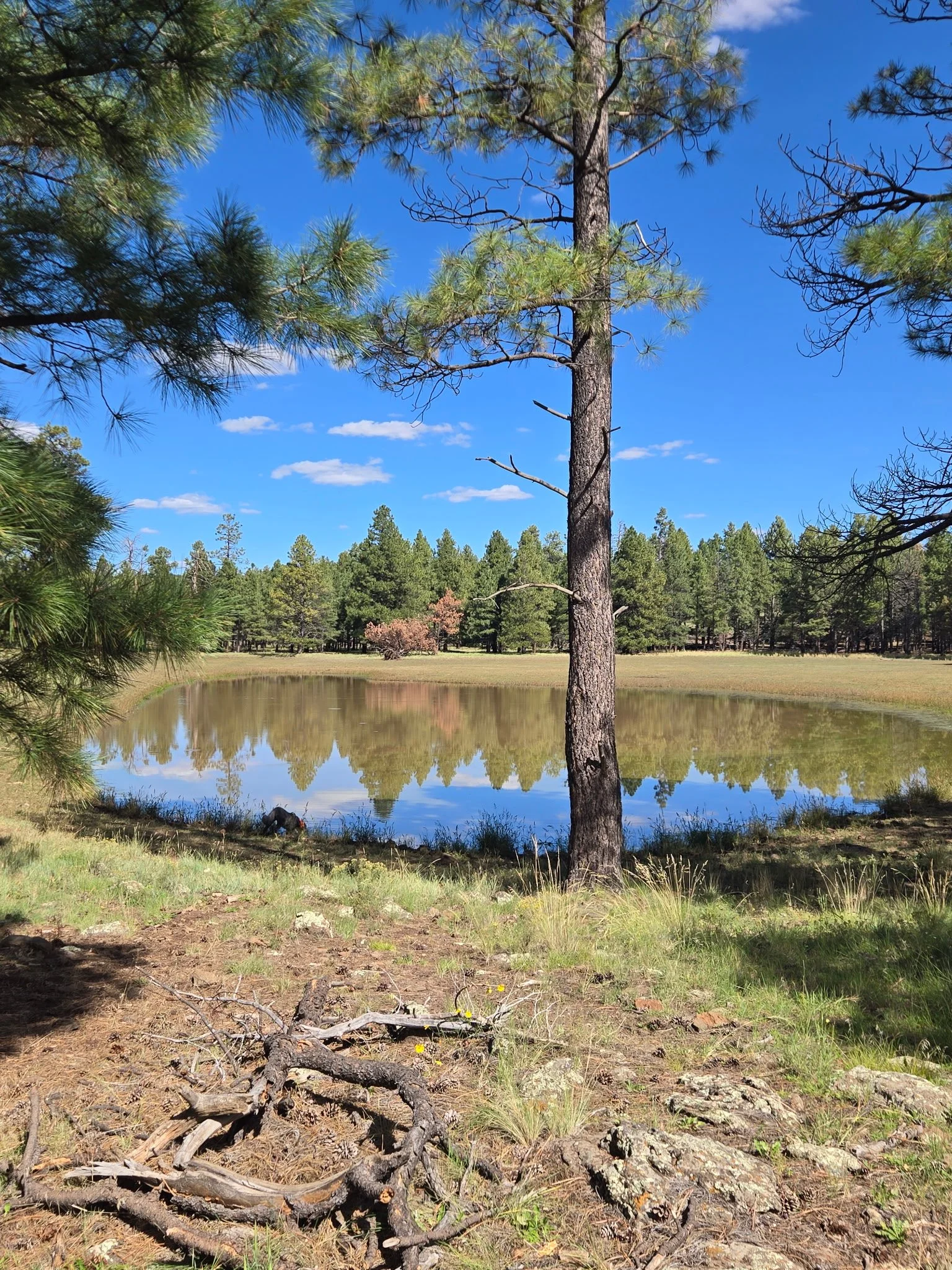
Can you find Sadie at Homestead Tank? One happy pup.