July 24, 2026
It was the type of day I always imagined on the AZT. Western wood-pewees and Steller’s jays serenaded us as we hiked on forest-lined foot paths. The summer rains ushered in the second blooming of wildflowers. All the regulars. Delicate fleabane. Purple tansy-asters. Indian paintbrush.
Plus, some late arrivals. Yellow goldenrod. White heath aster. Cardinal catchfly. I hadn’t seen the star-shaped, red flower on this mountain for five years, since 2021, when we were out foraging for wild mushrooms. Maybe the rains have come in time for a good mushroom crop. Fingers crossed.
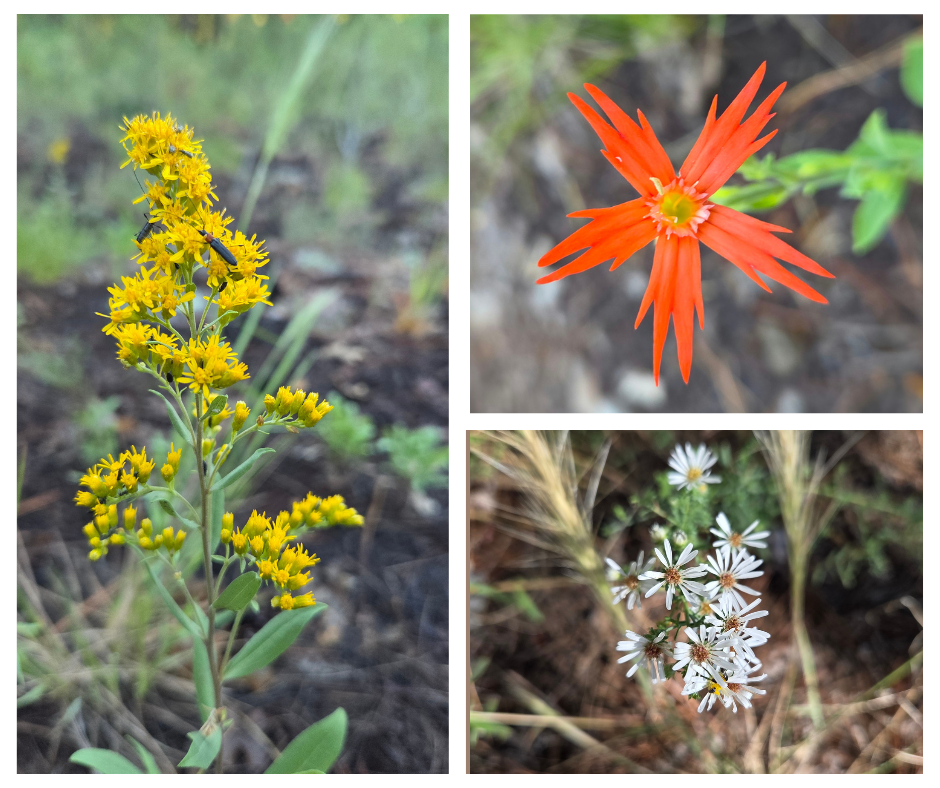
Goldenrod, cardinal catchfly, white heath aster
For those who do not live in Arizona, it’s hard to describe the excitement desert dwellers experience with the arrival of summer rains. It’s been 107 days this year since our last measurable rainfall. I can still remember the year we went 147 days in Chandler. Read that again slowly. One hundred and forty-seven days.
The rain gauge at the cabin measured three inches of rain since we left there twelve days ago. And rain is predicted every afternoon this week. Fire restrictions have been lifted. We are all breathing a bit easier.
And not only us. The entire forest seemed to be breathing moisture.
Continuing with the plan to hike the sections that radiate in both directions from our cabin at Mormon Lake, we did part of Section 29, the trail that runs near the village. We hiked once again on old railroad beds built by lumber companies for harvesting timber. Logging in the late 19th and early 20th centuries was dangerous and rough work. The men worked in primitive conditions without showers or running water. What kept them going? Lots of food!
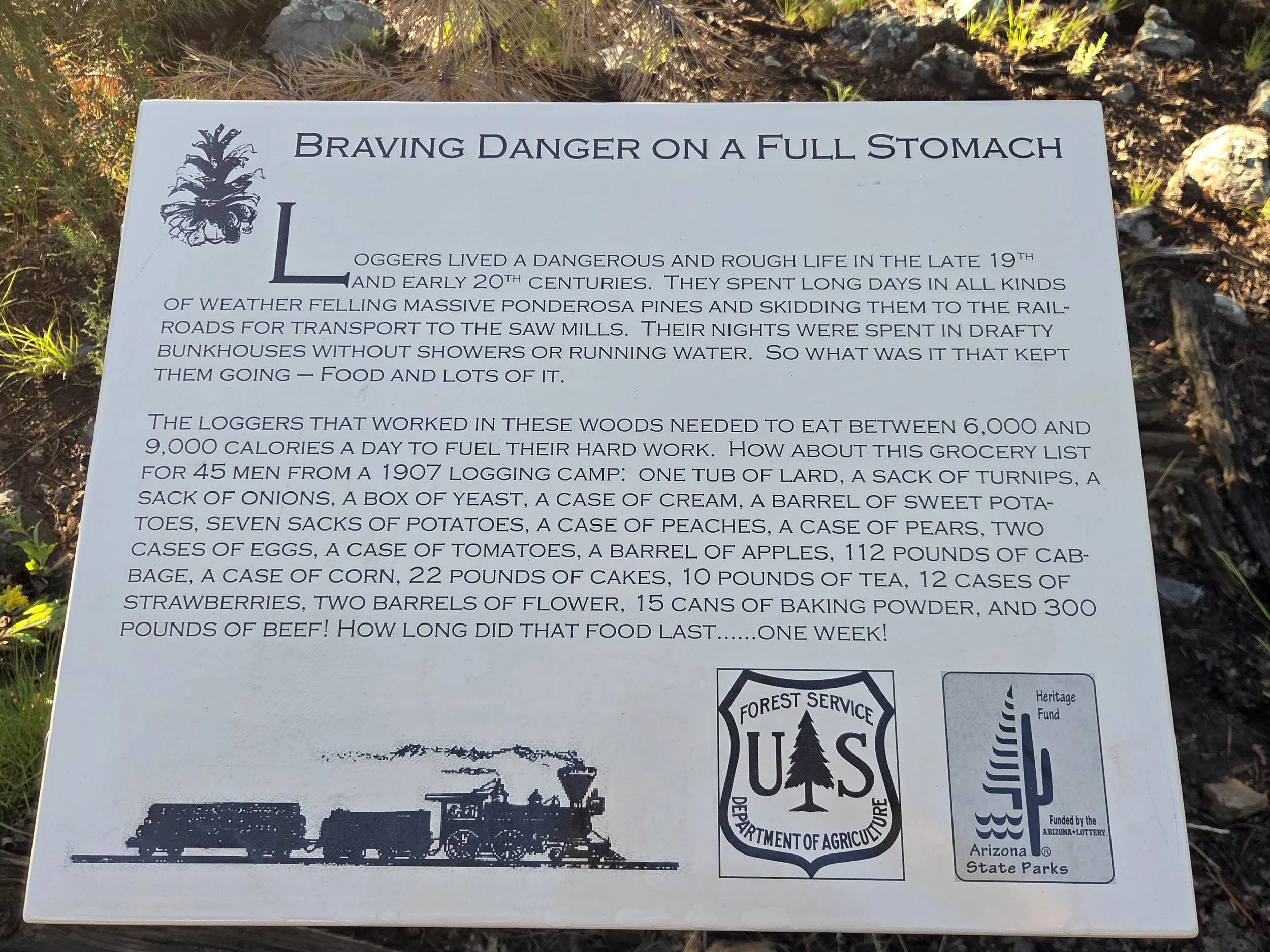
According to a historical sign on the route, this was a grocery list for 45 men in a 1907 logging camp. How long did this food last? One week!
One tub of lard
A sack of turnips
A sack of onions
A box of yeast
A case of cream
A barrel of sweet potatoes
Seven sacks of potatoes
A case of peaches
A case of pears
Two cases of eggs
A case of tomatoes
A barrel of apples
112 pounds of cabbage
A case of corn
22 pounds of cakes
10 pounds of tea
12 cases of strawberries
Two barrels of flour
15 cans of baking powder
300 pounds of beef
This was the fuel necessary for loggers to do the work. Hard work. Dangerous work. Hungry work.
“Where’s the coffee?”
That was the first question prompted after reading the list, as we took a moment to step back in history.
I mean, seriously? Ten pounds of tea made the list, but no coffee? You’re trying to tell me that loggers sat around sipping tea after grueling hours in the woods? I mean, I’m a tea drinker, so don’t get me wrong, I love a cup of Earl Grey in the morning.
But I’m also the granddaughter of Glenn Ora Hankins, a man who was not only a dairy farmer, but who also worked a small sawmill with his boys in the woods of northern Wisconsin. I am also the great-granddaughter of George Marion Hankins who worked the rails in the Dakota territories and later ran logs down the Wisconsin and Fox Rivers. Nobody was drinking tea while covered in sawdust!
Our history is not that far removed from where we now stand.
1907—the year the grocery list was made—was also the year the famous Maxwell House coffee slogan “Good to the Last Drop” began to appear in ads. According to urban legend, when President Teddy Roosevelt visited the Maxwell House Hotel in Nashville, he was served the hotel’s coffee. After draining his cup, he uttered the famous line, that it was “good to the last drop.” Did it really happen? The Cheek-Neal Coffee Company (the original maker of Maxwell House) was not about to let facts get in the way of a good story.
So, I don’t believe the no coffee thing. Maybe it didn’t make the grocery list that week, a mistake the cook did not repeat the following week.
Which prompts the question—what is the fuel necessary for me to do my work? And I am not talking about carbohydrates, proteins, and coffee/tea. Or the peanut butter granola bar in my backpack.
It’s one of the questions I carry as I walk under ponderosa pines. As I live out my 60s and step into my 70s, I am holding this question. What do I need in order to do the work? And what is that work? Three things I am discovering or remembering again:
The importance of rest.
The space I need to reset is different than my husband’s energizer bunny personality.
Friendships don’t just happen as we age. Maybe especially as we age.
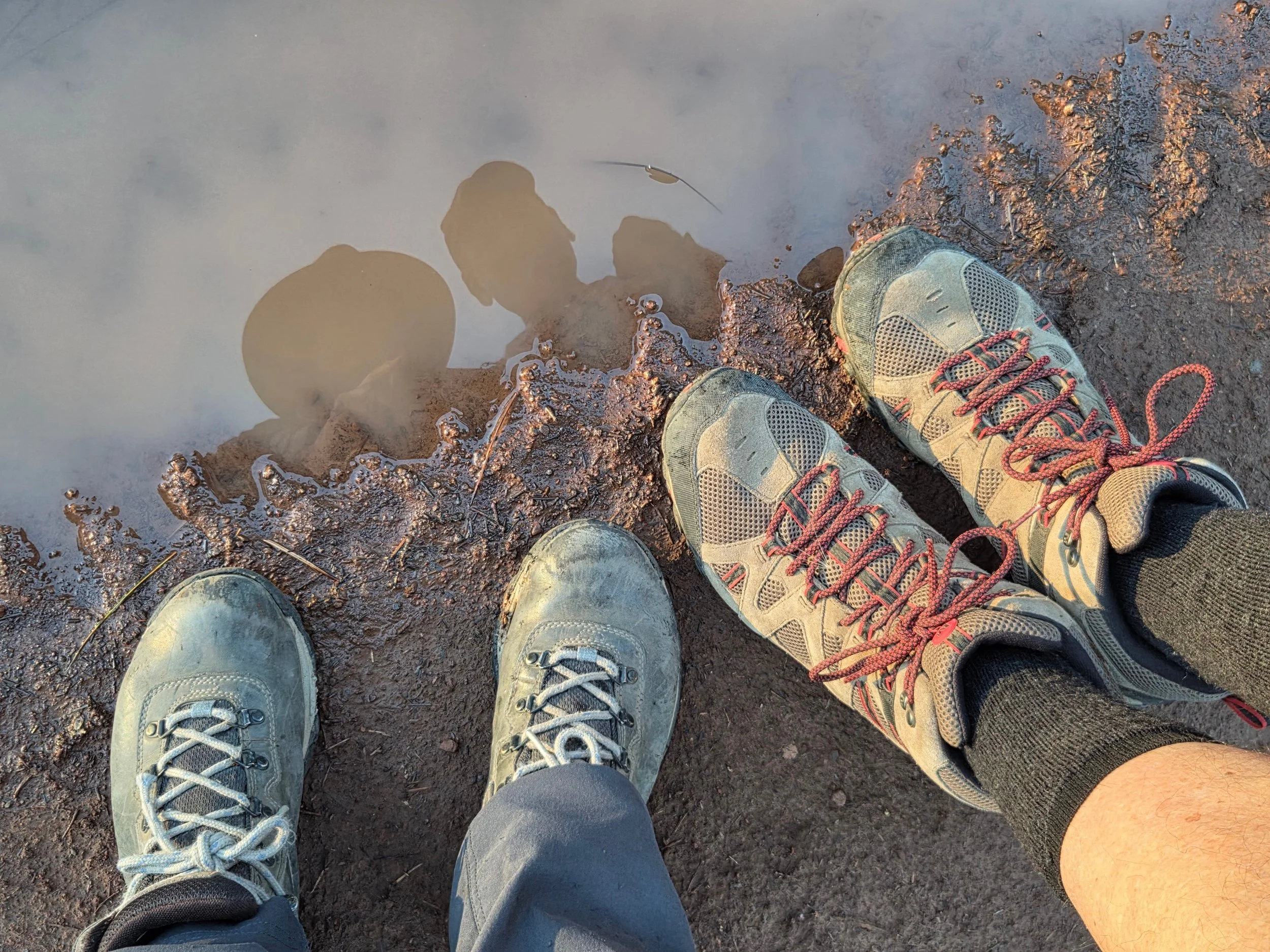
These are some things I am exploring as I hike with dusty feet. When all is said and done, at the end of life’s trail, I want to be able to say, “It was good to the last drop.”
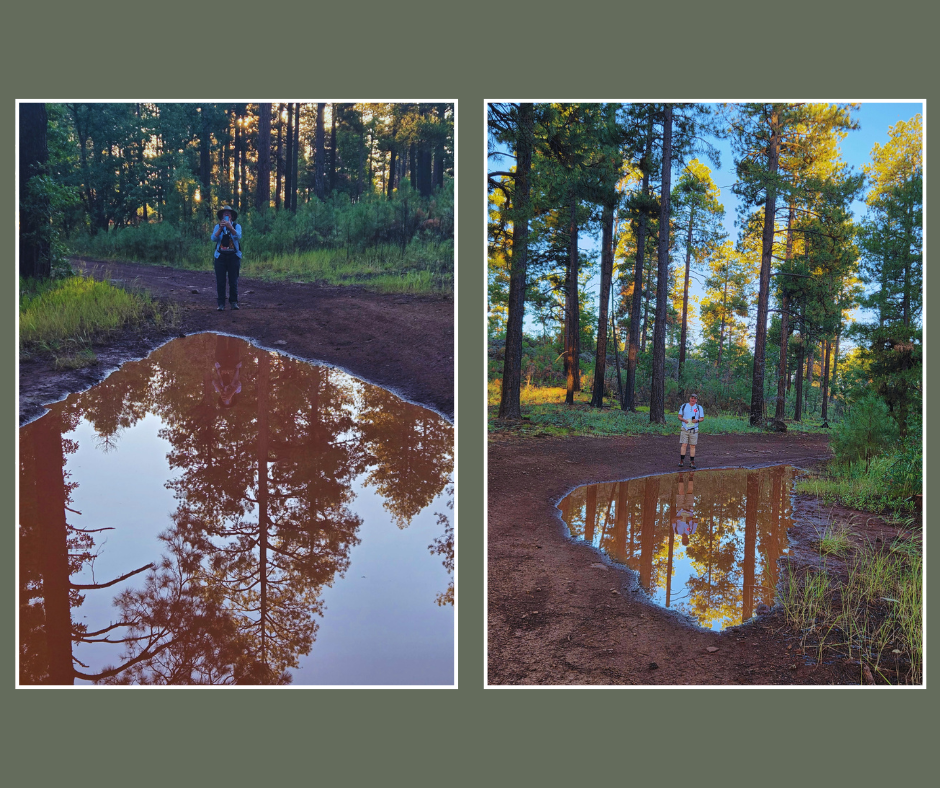
The result of beautiful rain.
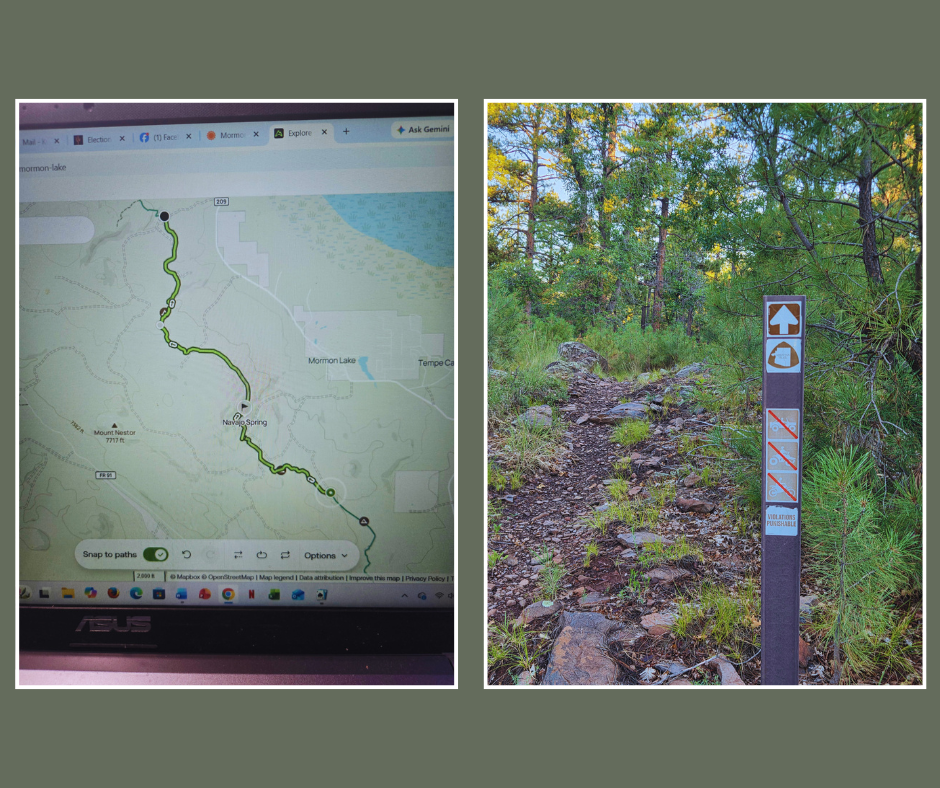
Hiking Stats:
July 24, 2026. Part of Section 29.
FSR 219 to 90H, near Navajo Springs, outside of Mormon Lake Village
59 degrees – 72 degrees. 5:40 to 7:40 am
About 5 miles, 4 miles on the AZT. 12, 497 steps.
Haiku:
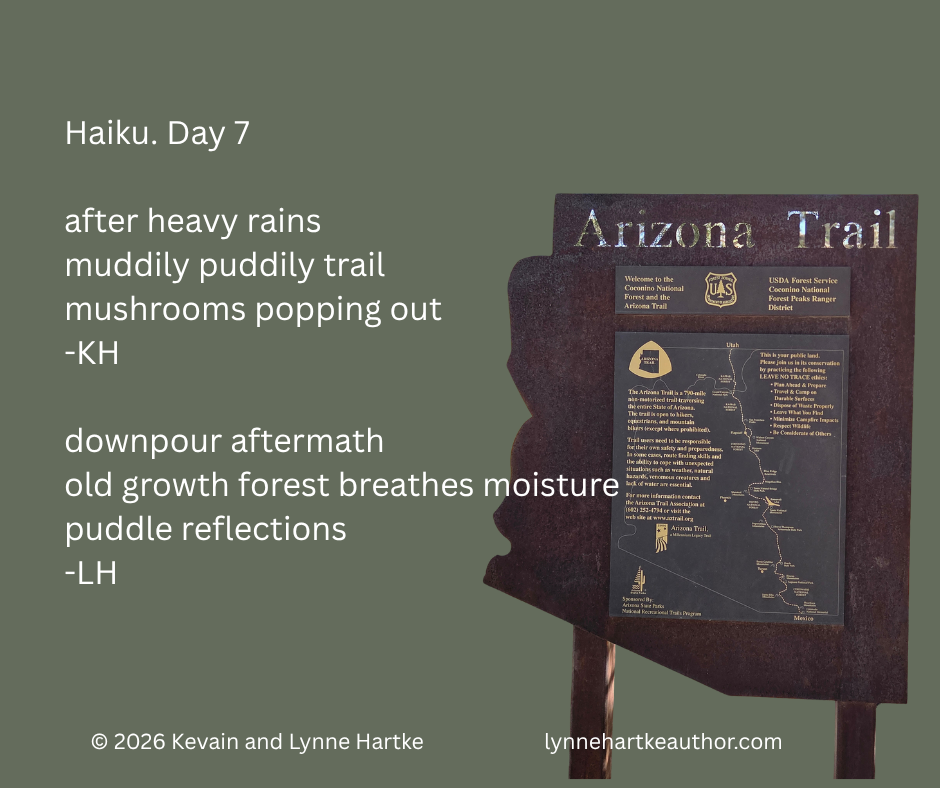
For a list of previously posted stories of our adventures on the AZT, click here.
To keep up to date on future stories, sign up for my monthly newsletter, “Wonder*FULL.”