Hiking Across Tarantula Kingdom: Arizona Trail Day 3
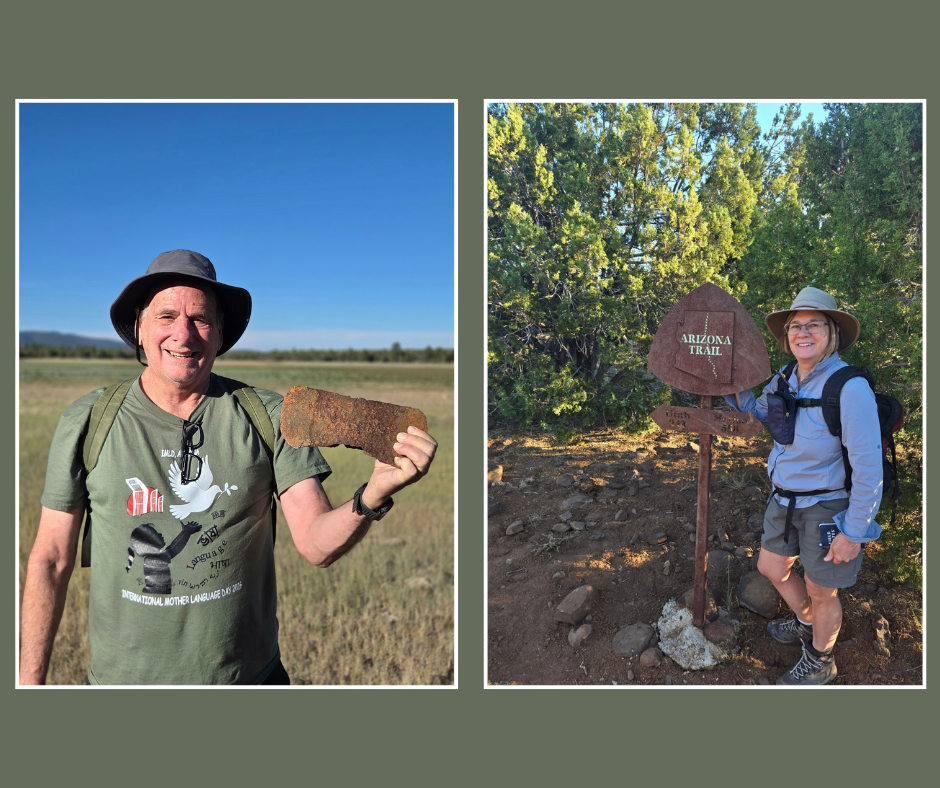
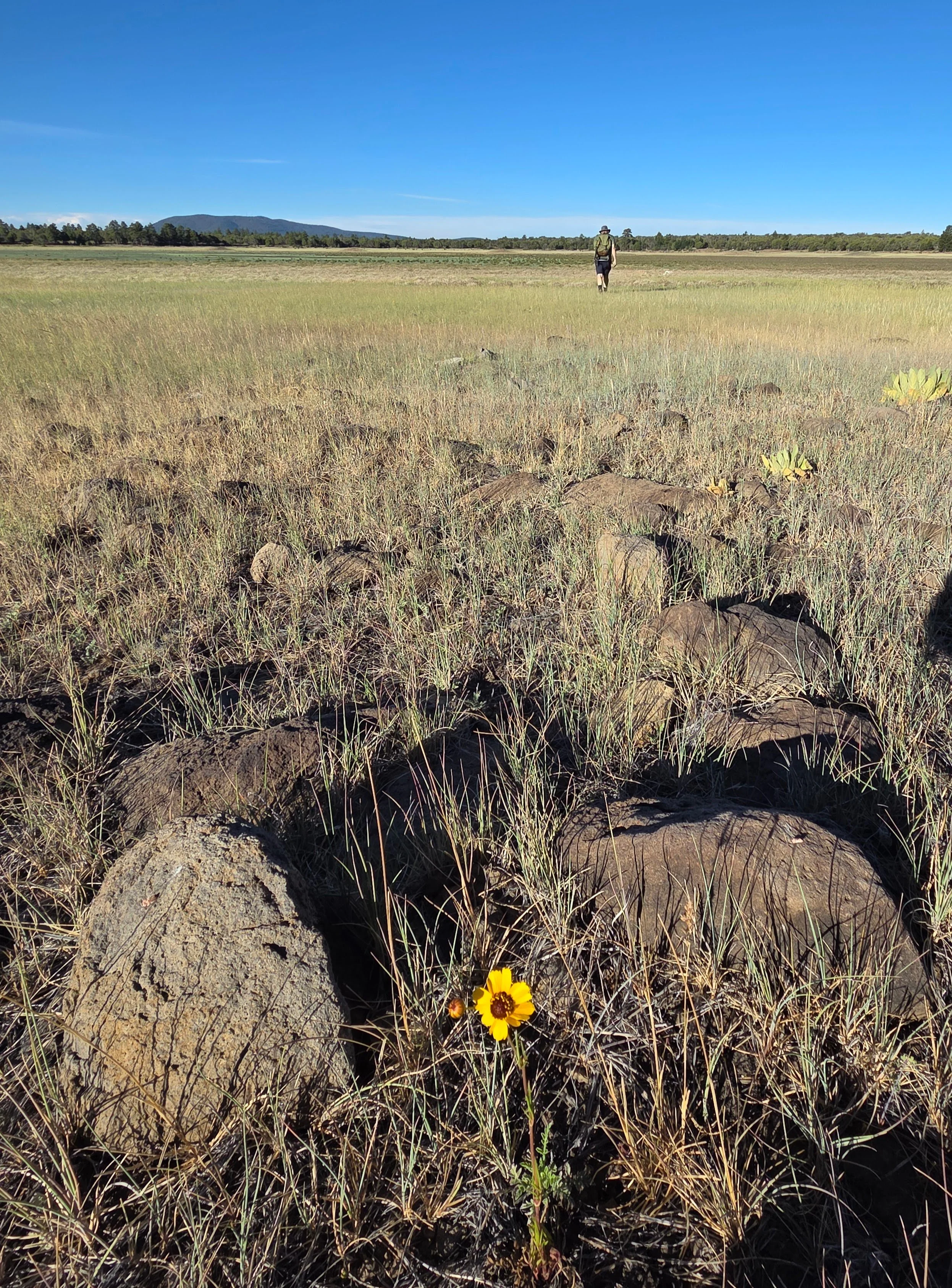
After a series of switchbacks out of Lakeview Campground, we hiked the rest of the day on Anderson Mesa, open grasslands interspersed with pinyon-juniper trees. The trail was dry, dry, dry. And so very dusty. Most of the morning was spent on Forest Service Road 129A. We also walked the northern border of Horse Lake, a mostly-empty lake surrounded by wide-open spaces. The free-range cattle kept an eye on us throughout the day.
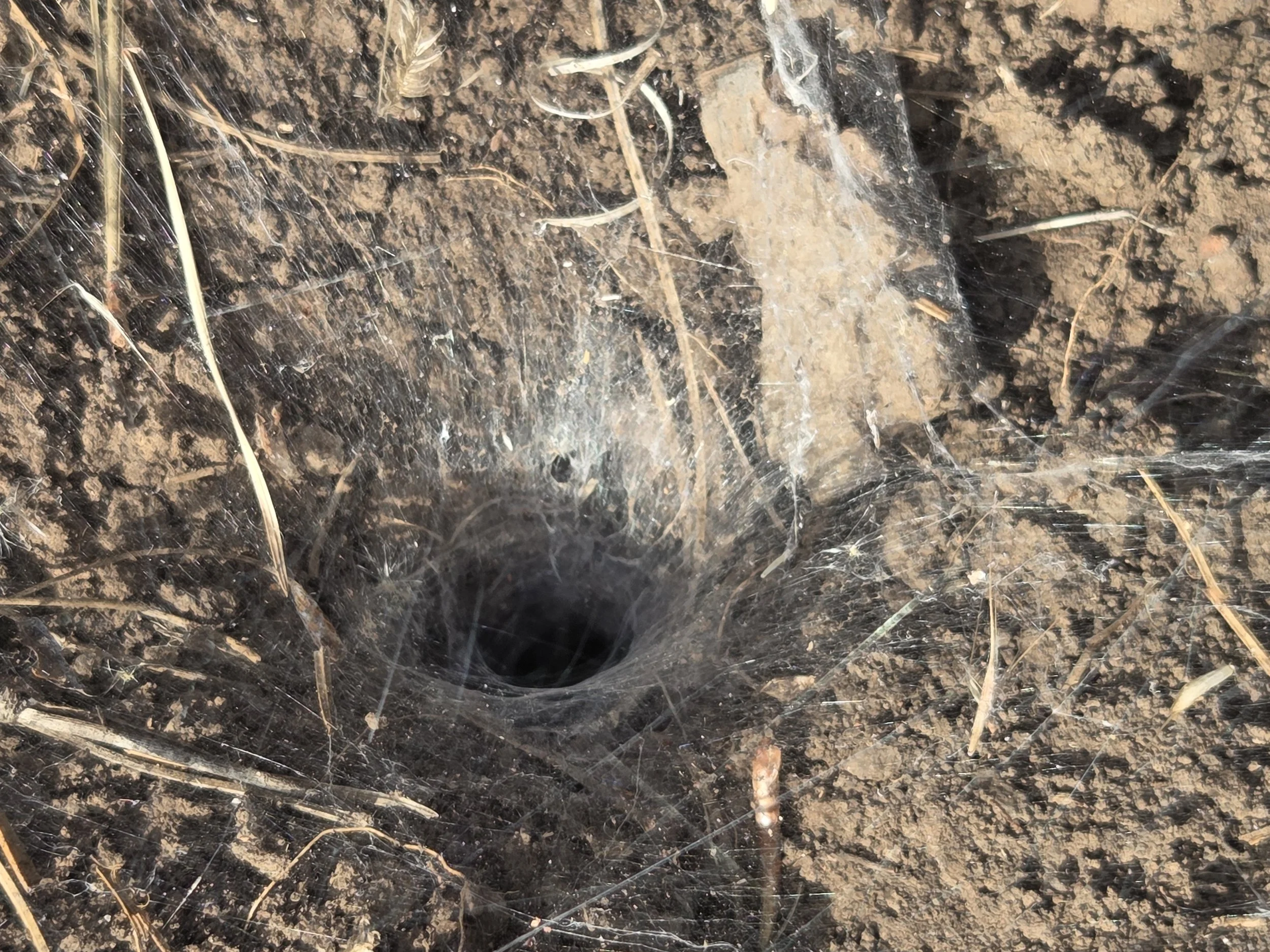
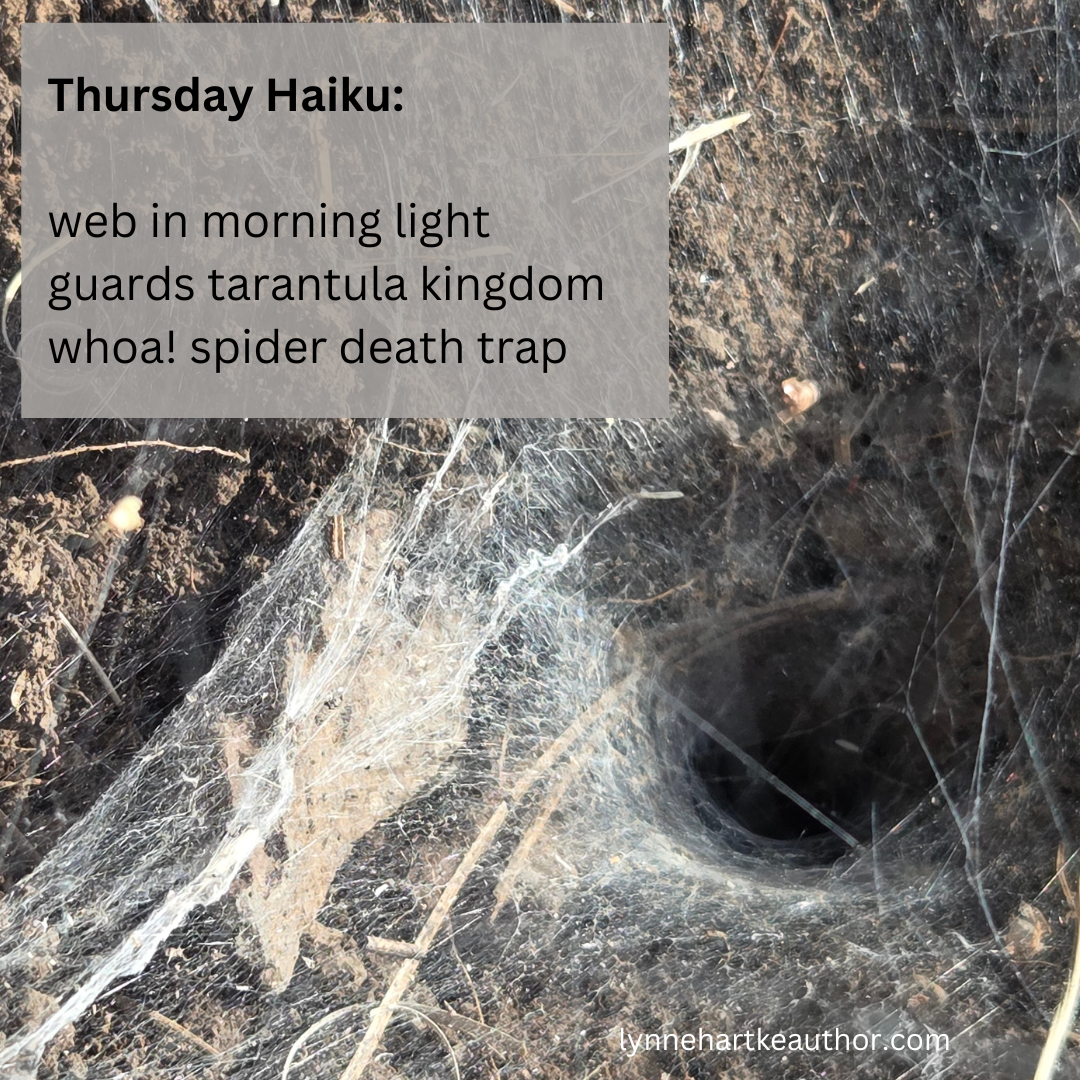
The morning light caught the shimmering webs that covered the nickel-to-quarter-sized holes of tarantula spiders. The silken threads reinforced each burrow, providing the individual tarantulas with a safe, underground space. The silk linings also included a “trip wire” to inform the spider of any insects caught in the sticky webs.
“One tarantula hole,” I said, jotting a comment in my hiking notebook. I had been excited to see two holes the day before. “And there’s another one.”
“Here’s a third,” Kevin said, “and a fourth.”
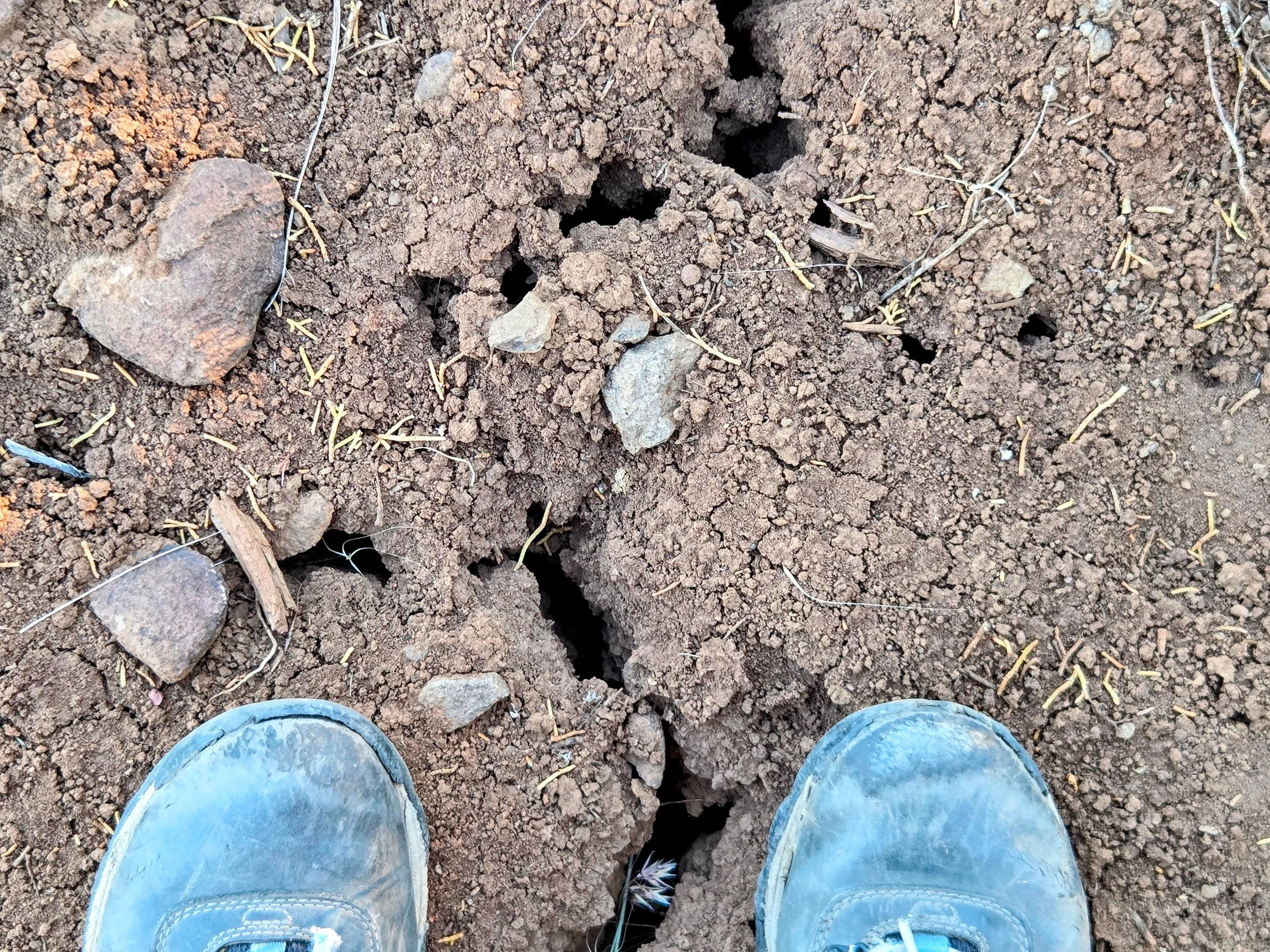
My excitement quickly dimmed. I quit counting holes at thirteen. The total count numbered in the hundreds. We were trespassing across tarantula kingdom!
Although tarantulas are harmless unless provoked, I was thankful we were not hiking in late fall during tarantula migration season (Yes! It’s a thing!), when males go searching for females. A trail covered in giant, hoping-to-mate spiders was a nightmare I hoped to avoid.
The flat, easy hike on the mesa gave me space to ask questions. I wanted to talk about the deeper reasons for our choosing to hike the AZT.
Did we even have deeper reasons?
Last week, both Kevin and I started reading memoirs written by other hikers. Kevin chose a book by Doug Ball, who started the AZT at age 62, entitled, Geezer on the Trail: How to Hike the Arizona Trail in 13 Short Years. (We plan to finish the trail quicker than he did!) I chose a book by Sean and Jamie Dietrich: I Would Walk Five Hundred Miles: A Memoir of Learning You Have Always Been Enough. They hiked the Camino de Santiago in 2025.
People who walk the Camino are called pilgrims. Dietrichs walked the entirety of Spain, including over the Pyrenees Mountains. “A pilgrim is someone who journeys for spiritual reasons…looking to be changed,” Sean Dietrich writes.[1] In the book, he reflects on what he discovered about himself, others, and God.
“Why are you hiking the AZT?” I asked Kevin after I mentioned the Camino memoir.
“Well, we both like hiking.” Kevin said, as he skirted around another tarantula hole. “We’ve been talking about it for years.”
“Any other reason?”
“Not sure.”
That was a fair answer. I was also unclear about my reasons. Something was drawing us, pulling us to hike the entire length of our state. It was more than just for pleasure.
We are both in a season of transitioning.
Kevin has less than a year remaining as the mayor of Chandler. He is also running for another political office. If elected, he will transfer from one position to the next in January 2027. Additionally, we recently retired from being on staff at a church. We were there for forty-one years, Kevin as a pastor and me as a pastor’s wife. Forty-one years!
The intersection of pastoring and politics has been a challenging place for me. A difficult place. It is a place where you are expected to have answers to complex problems. But more than that. You are expected to have answers that people want to hear.
As a writer in the faith space, I have also been expected to have answers. To pen five hundred or one thousand words with a conclusion. To simplify this challenging human experience to a relatable story with three quotable points.
I am weary. Weary of the expectations of being a Carrier of Answers. My backpack is not the only thing that weighs me down. I need room for curiosity and wide, open spaces. So yeah, I plan to lace up my boots and wander dusty trails, keeping an eye out for tarantula holes.
Desert wanderers throughout the ages have had dusty feet. The Israelites on the way to the Promised Land. Jesus and his disciples. Other saints and scholars. Wanderers aren’t known for following a straight path from A to Z, with easy answers. Wanderers are known for listening. For learning. And for walking.
In the book, The Dusty Ones, A.J. Swobada writes that seventy-five percent of the teachings of Jesus took place as he and his disciples walked from one place to another. Jesus taught on the walk. Swobada writes, “The word for “walk” in the New Testament is peripateo. Jesus was known as a peripatetic teacher, his walk was his talk. Or, more precisely, he walked and talked, and the two were one.”[2]
I like that. I need that.
Look for me on the Arizona Trail. Walking. Taking photos. Learning from creation. Discovering new wonders. Watching and listening to the ways Jesus continues to walk with me.
I want to become comfortable as a Holder Of Questions.
With dusty feet.
******
Day Three Hiking Stats:
July 4, 2026. Happy 250th birthday to the USA!!
5:30 – 8:41 am.
Sunny. 49 degrees at the start. 75 degrees at the end.
Part of Section 30. Lakeview Campground to Horse Lake Trailhead, heading south, approx. 7 miles on the trail, with another mile getting to the actual trail. We drove two vehicles, leaving one at Horse Lake TH.
Kevin – 16,226 steps.
_______________________________________
[1] Sean and Jamie Dietrich, I Would Walk Five Hundred Miles: A Memoir of Learning You Have Always Been Enough (Birmingham, AL: Ironwood Press, 2026), 15.
[2] A.J. Swobada, Dusty Ones: Why Wandering Deepens Your Faith (Grand Rapids, MI: Baker Books, 2016), 99.
I brought the blog out of retirement to write about our AZT adventures. I will include links to new blog stories in my monthly newsletter, “Wonder*FULL.” To sign up to get that monthly correspondence, click here.