Ghosts of Technology Past: Day Two on the Arizona Trail
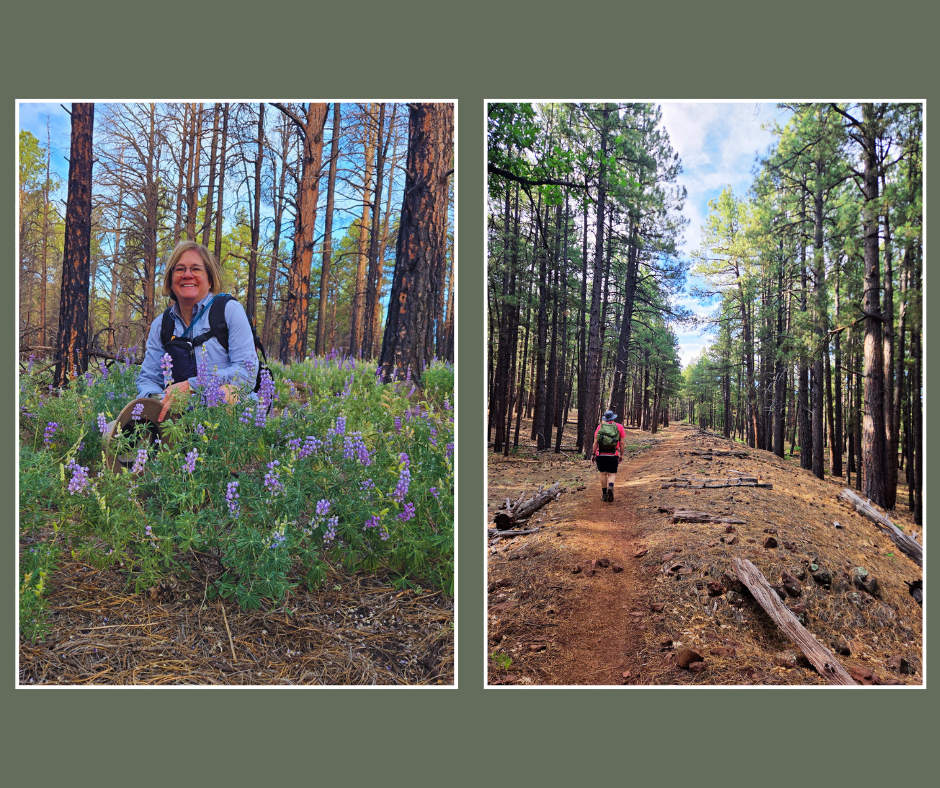
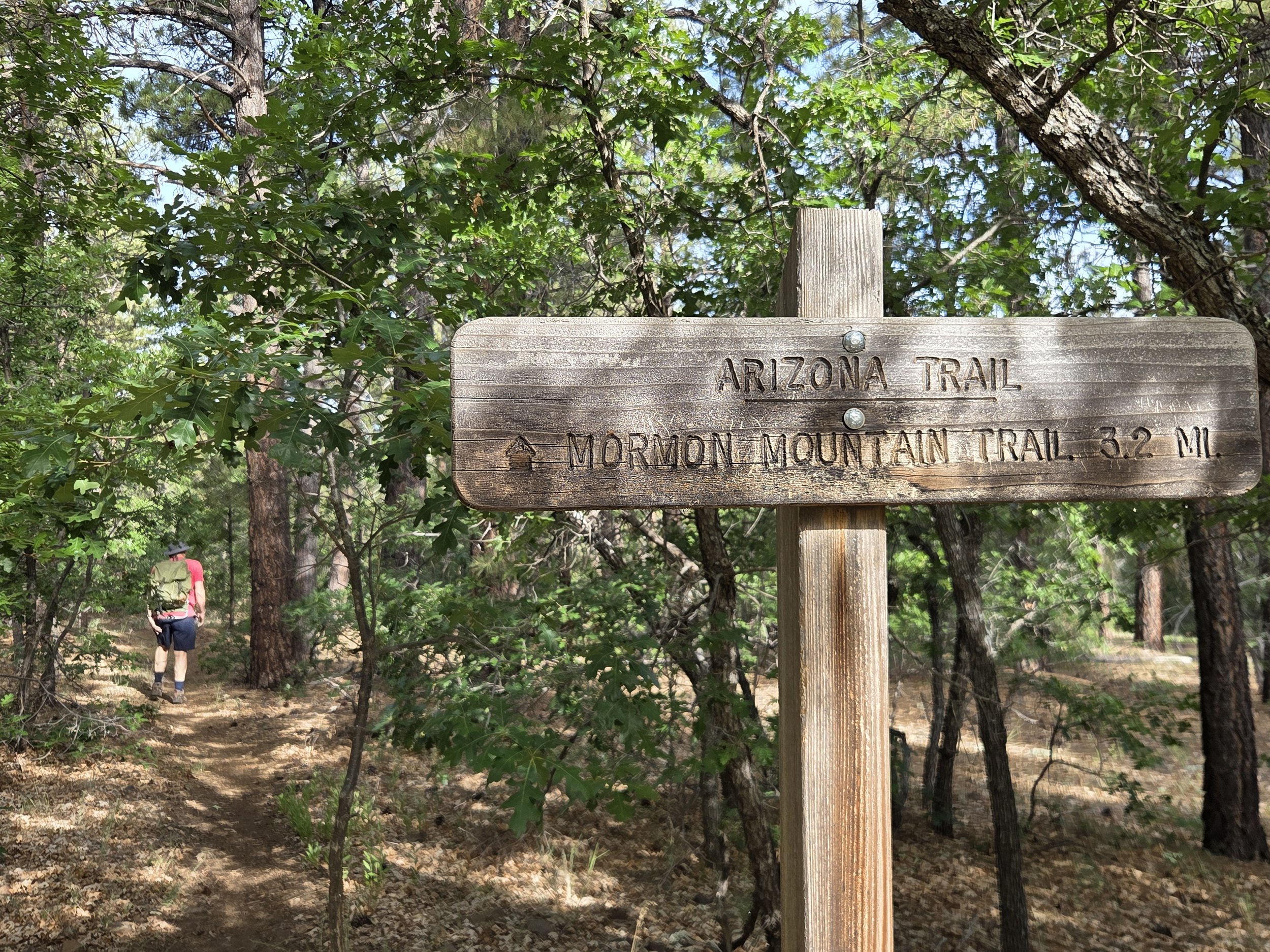
We hiked nine miles today, south on the Arizona Trail (AZT) starting at Pine Grove Campground. We finished at our cabin in the shadow of Mormon Mountain, about one hundred yards off the AZT.
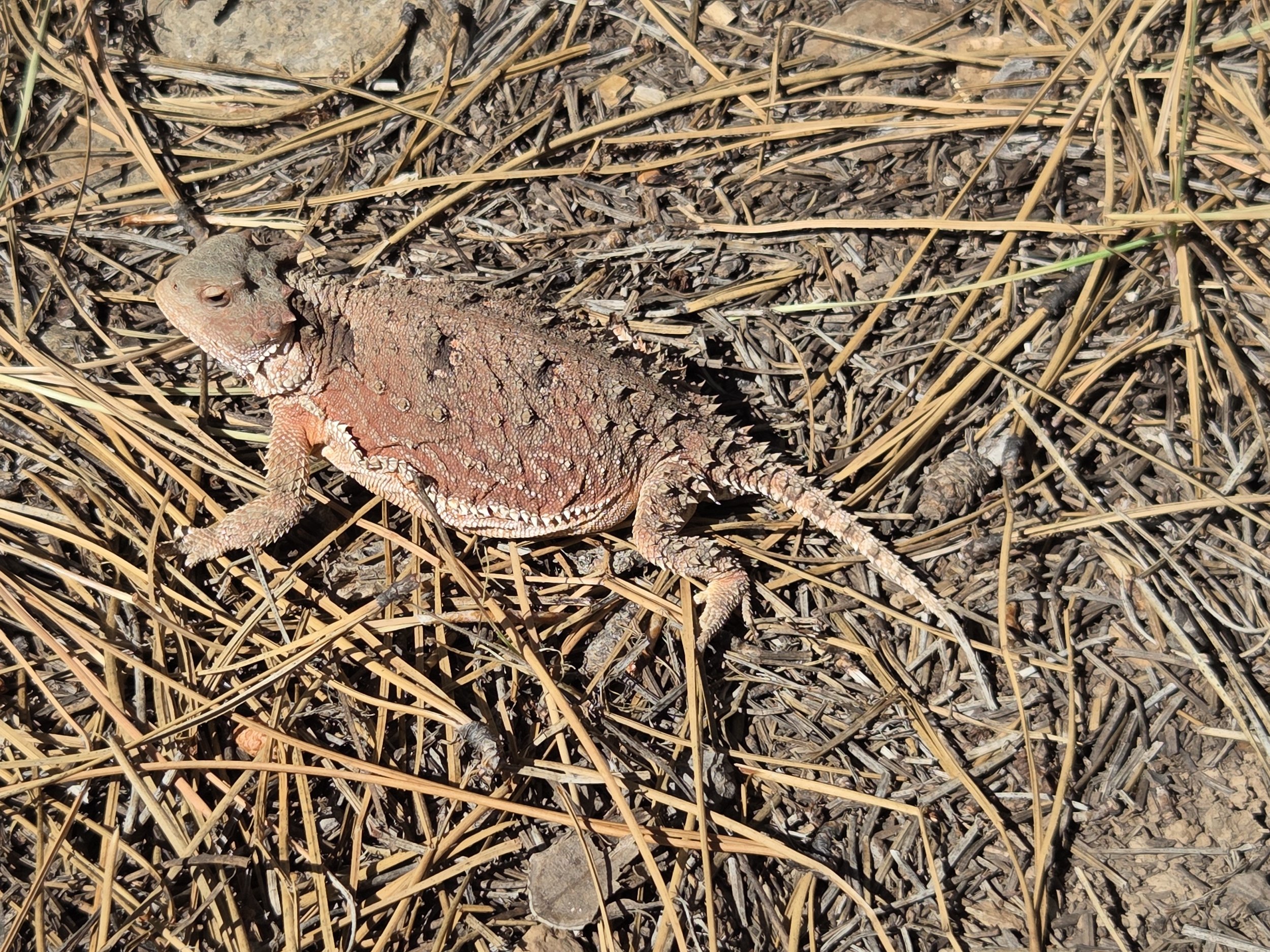
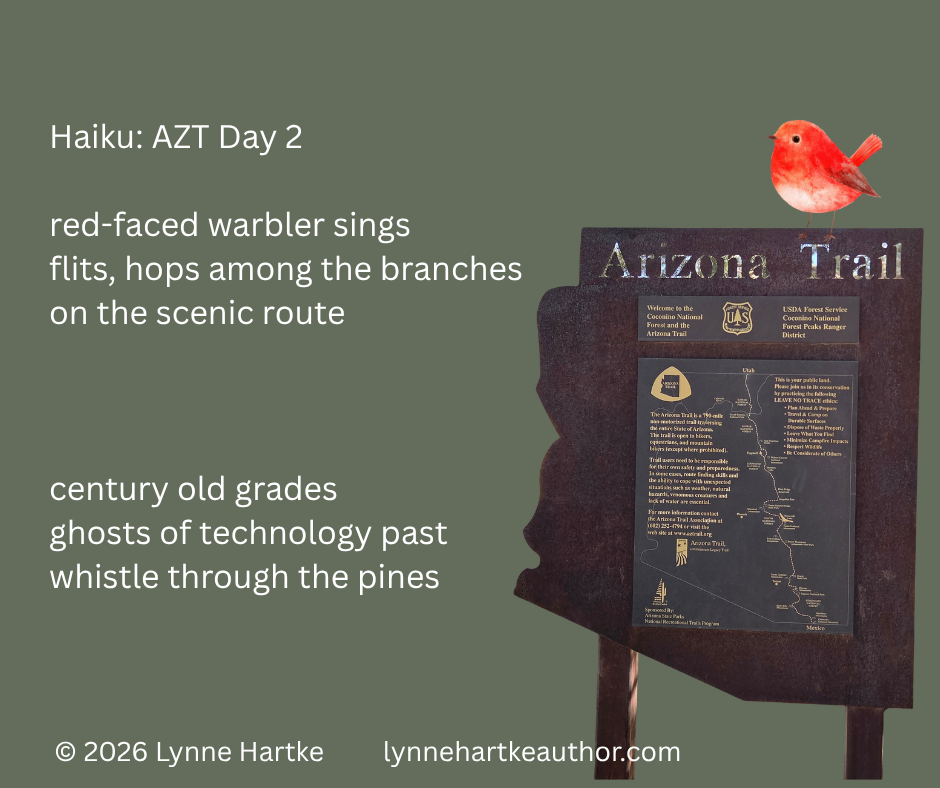
We walked through an old-growth ponderosa pine forest, some of the oldest trees dated back 200-500 years. The stands of trees were interrupted by small clearings where wildflowers grew. That morning, we saw an elk herd with a calf, a lone bull elk with a huge rack, two coyotes, a horny-toad lizard, twenty varieties of wildflowers, and ten different birds, including a red-faced warbler, who watched us with curiosity as he flitted from branch to branch.
It’s as if all creation cheered for us as we took a few hours in the pines, enjoying the scenic route.
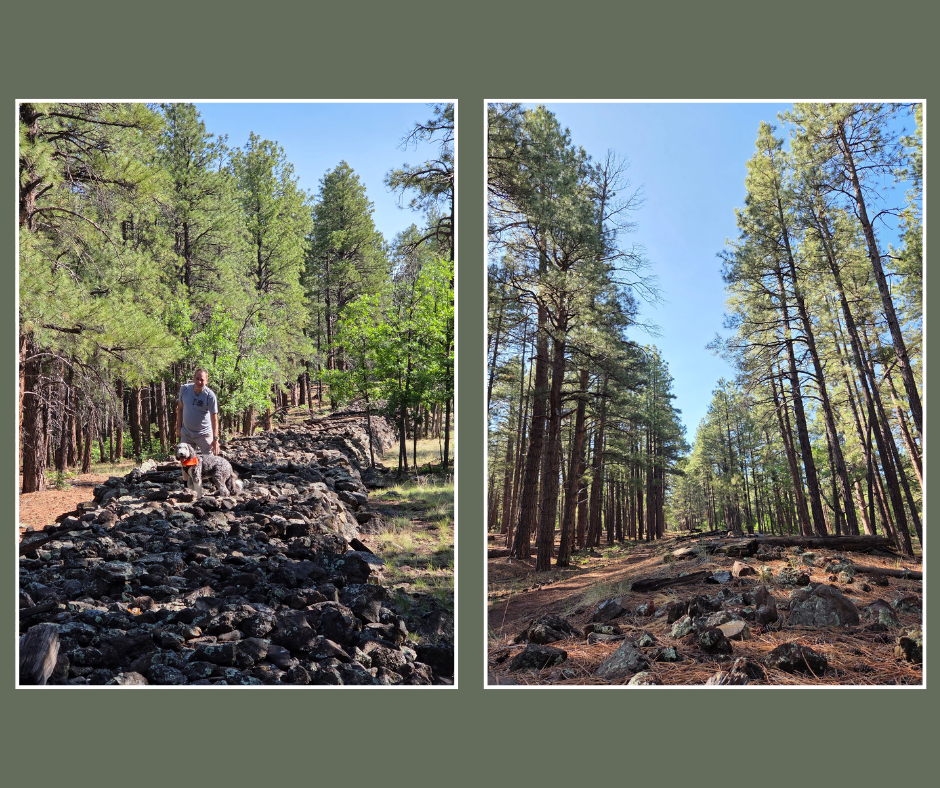
We also walked along an old railroad grade, built in 1923 by the Flagstaff Lumber Company. The train hauled trees during the week, and passengers on the weekends, up to three hundred people who came to enjoy Mormon Lake, the largest natural lake in Arizona at that time, great for boating and fishing.
“We’re walking on the ghosts of technology past,” Kevin said, as he stepped across old railroad ties.
“What did you say?” I asked
“We’re walking on the ghosts of technology past,” he repeated.
“That’s a great line for a story,” said the writer.
“You’re welcome,” said the writer’s spouse.
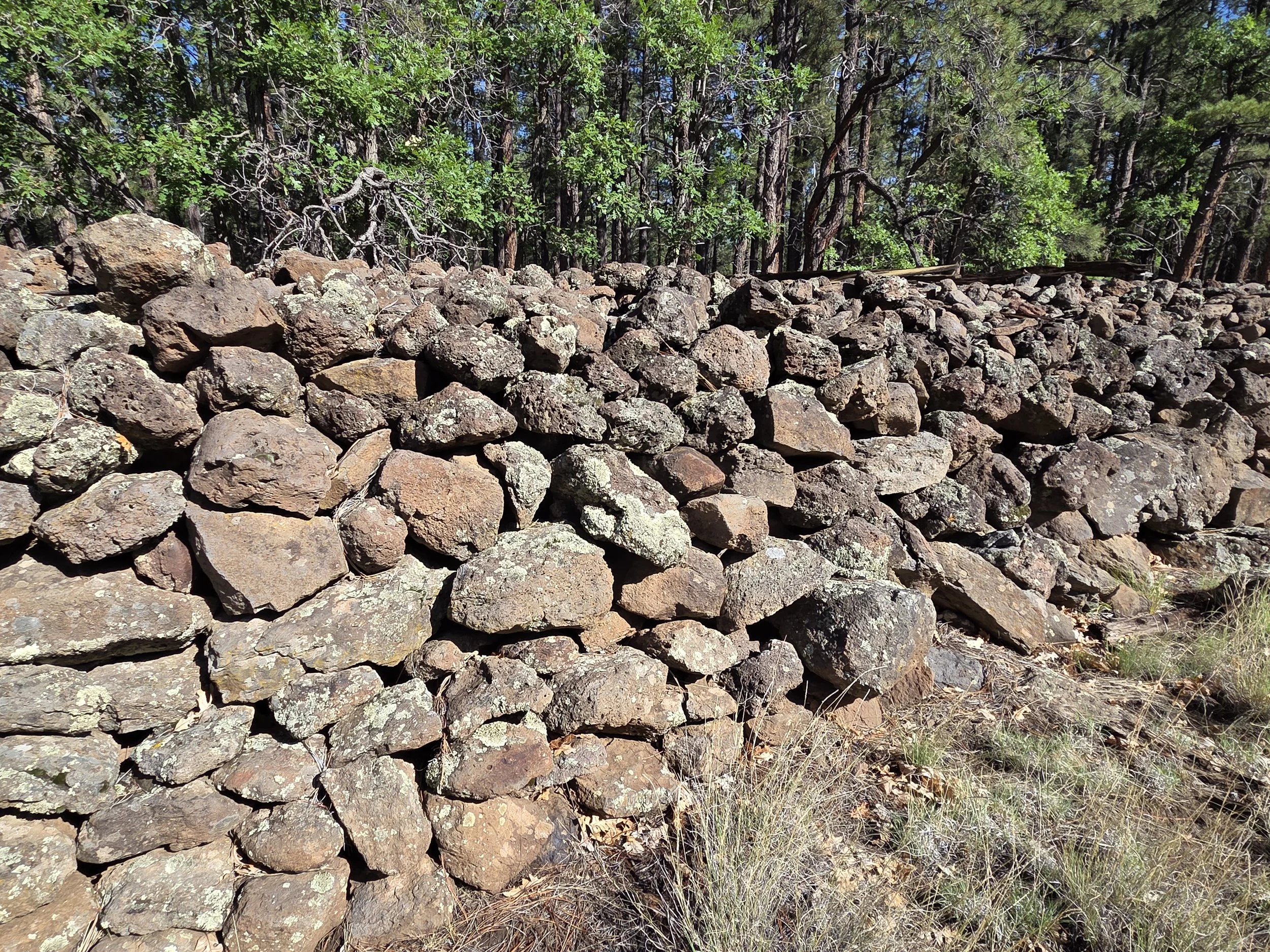
He climbed on a section that I considered to be an engineering marvel. The builders had created the elevated railroad grade by hand, with dry-stacked stones, stable enough to hold a train loaded to capacity.
One hundred years ago, a typical American home had just started to utilize electricity (40%). Some had a telephone (35%), and many had a radio. The families who traveled by rail chose to leave their modern conveniences for a weekend away, while camping or renting a small fisherman’s cabin, with no electricity, running water, or indoor bathroom. People came to Mormon Lake to escape their normal routines.
A simpler life.
And here we were a century later. We now own one of those one-hundred-year-old cabins. (We have an indoor bathroom.) We also embrace a chance to leave behind our hectic, city lives, to experience our own version of a simpler life.
What will future generations say when they walk beside the ghosts of our technology? Will they shake their heads at our obsession with computers and AI? Will they point condemning fingers at our addiction to screens? Or will they have found a balance between technology and face-to-face, relational life?
Forget future generations. I want to figure that out now!
It didn’t escape my attention that Kevin and I walked beside the remnants of a steam-powered route using our own muscles and legs, our way of choosing to leave behind a fast-paced world. But I could not say we had completely abandoned technology. We carried cell phones in our pockets, after all.
As we hiked in the dappled shade of the ponderosa pines, I hoped we would discover some lasting balance to our driven lives as we continued our 800-mile quest.
I prayed the ghosts of our own technology would not come back to haunt us.
*******
Hiking Stats:
July 3, 2026. 5:40 – 9:30 am.
Waning Gibbous moon.
Sunny day. Started at 50 degrees. Ended at 68 degrees.
Part of Sections 29 and 30 on the AZT. Pine Grove Campground to our cabin near Mormon Lake, past Mayflower Springs, heading south.
9 miles. 18,900 steps (Kevin).
I brought the blog out of retirement to write about our AZT adventures. I will include links to new blog stories in my monthly newsletter, “Wonder*FULL.” To sign up to get that monthly correspondence, click here.