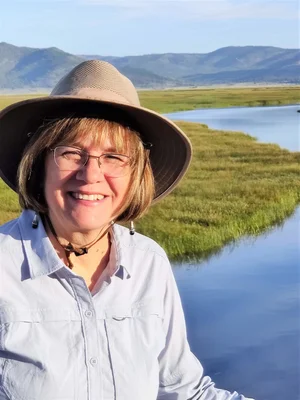
A red-letter day.
The phrase originated with the tradition of church calendars, a practice dating back to the 1500’s before the printing press. Holidays and saints’ days were written on the calendar with red ink. Ordinary days were written in black.
Now the phrase is used to mark a day of celebration. A special, happy occasion.
A red-letter day. Today qualified.
“Are you ready for the start of the AZT?” I asked as I added fresh peaches and strawberries to my bowl of yogurt. Granola and a handful of nuts completed my well-thought-out breakfast. I wanted energy for the day ahead.
“Sure,” said Kevin as he poured cereal into a bowl. Fruit Loops. Generic. Not exactly the breakfast of champions.
“You’re eating that?” I asked.
“Why not? We will be back before lunch.”
“But it’s the AZT!” I countered. We’d been contemplating this day for years. How could my husband have such a casual attitude?
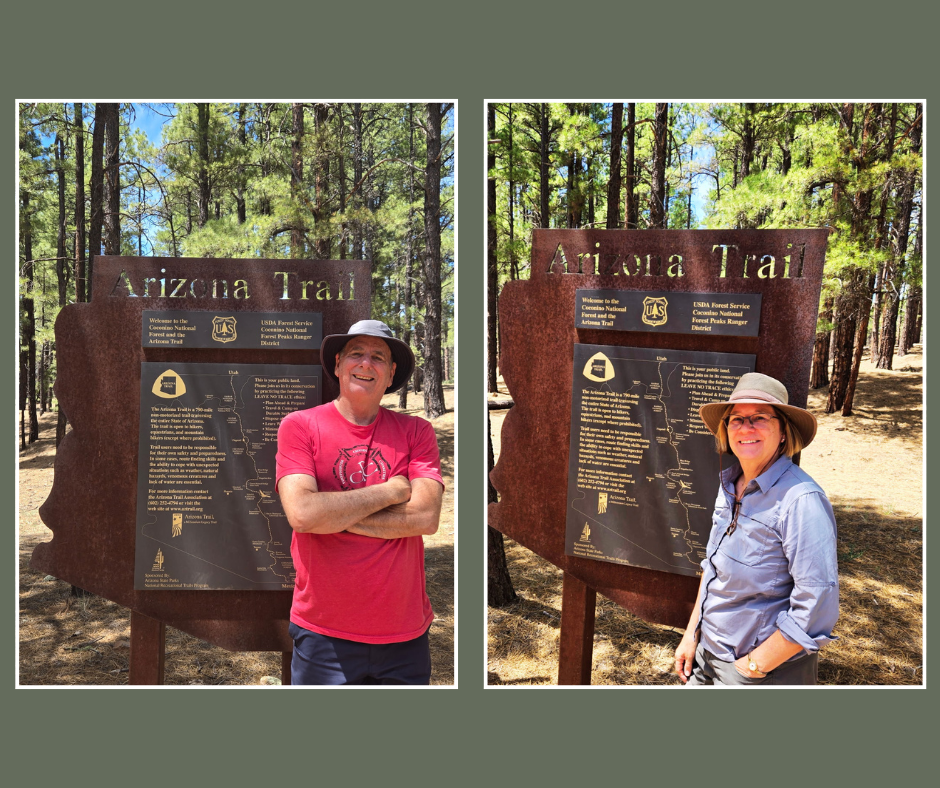
Then I noticed what he was wearing. His favorite red T-shirt.
As mayor, Kevin was often given T-shirts. At ribbon cuttings. At school assemblies. At fundraising events. He received this shirt at a cancer event before the pandemic. No matter how deeply I buried it in his dresser drawer, Kevin pushed aside all the other shirts to wear his favorite.
The neckline had begun to fray. The black lettering was worn and faded.
Didn’t Kevin know I wanted to take BEGINNING THE AZT PHOTOS to memorialize the day? To document this moment in our history? And he was wearing a ratty, red T-shirt?
I shook my head. Definitely, too casual of an attitude!
65-and-a-half-year-old me let it go. Twenty-and-a-half-year-old me would have made it an issue. I knew my husband carried the weight of many concerns on his shoulders. What those shoulders were wearing has never been one of them.
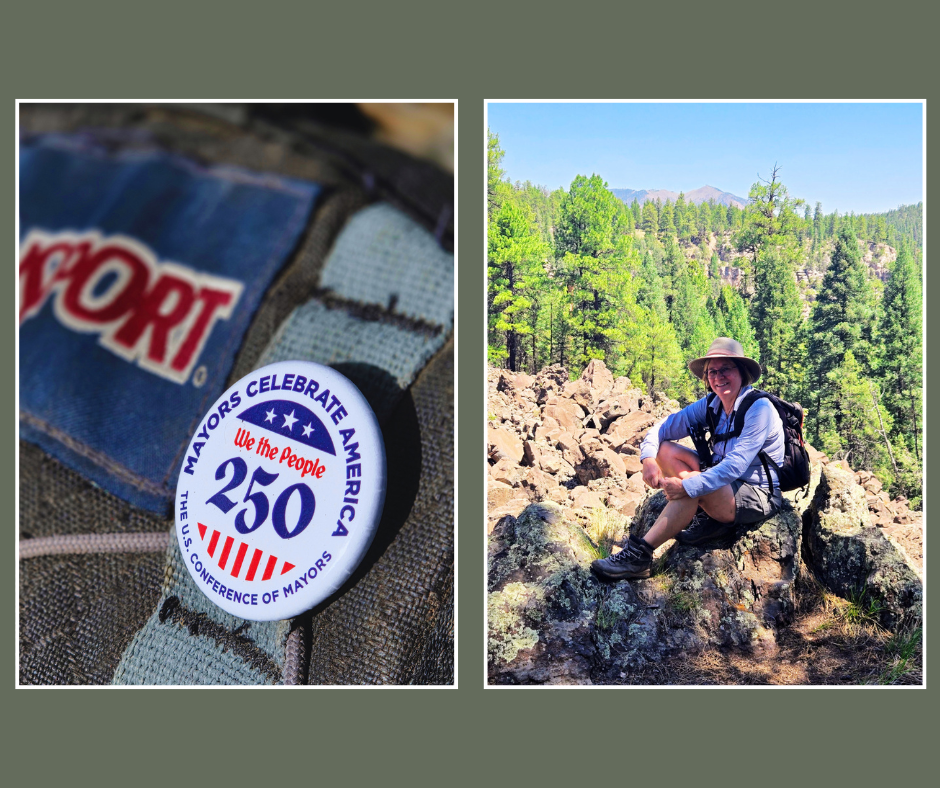
We parked the car and strapped on our backpacks at Canyon Vista Campground. We strolled down Sandy Canyon where the trail ran parallel to Walnut Creek. At the Walnut Canyon Junction of the AZT, we headed left making our way through Skunk Canyon and back through Fay Canyon, before looping back to the car. *
We hiked in an easy rhythm of forty-five years. Kevin usually led the way as I continually stopped for photos. Of a mountain chickadee. Of Indian paintbrush. Of a huge, heart-shaped, tufted evening primrose. When I got too far behind, Kevin stopped and waited for me.
The morning was typical for late June. Sunny, in the low sixties, with temps rising in the afternoon. However, the variety of wildflowers we passed was not typical. I documented over fifty-four different flowers, from the common sweet yellow clover, to a first-ever sighting of silvery rock lettuce.
“What’s that bright yellow plant?” Kevin asked, pointing to a vibrant plant with clusters of yellow-orange flowers.
“I’m not sure,” I said. “I’ve never seen it before.” A quick search on a plant app revealed the answer. Butterfly milkweed, one of almost thirty milkweed varieties that grow in Arizona. We also documented poison milkweed and antelope horn milkweed.
Arizona is located within the Monarch butterfly migration route. Milkweeds provide essential host plants for monarch caterpillars who only feed on milkweed plants to survive. Talk about picky eaters!
As a girl growing up in Minnesota, I had walked the ditches along the country road near our home, searching under the leaves and pink flower clusters of the common milkweed plant for tiny Monarch caterpillars. The milky-white sap had run over my fingers as I had snapped off stems containing caterpillars and had added them to a glass quart jar for an elementary school science assignment.
At school, we had added fresh milkweed stems until the caterpillars had entered the chrysalis phase (a jade-green shell with a row of tiny gold dots) and finally had metamorphosized into orange and black butterflies. We had watched the Monarchs fly away over the school playground.
Science at its best.
Halfway across a continent and decades later, I was still out in nature looking for new moments of wonder.
But now, Kevin was with me, humoring my flower obsession. Forty-five years ago, I’m sure he never saw this in his future, a wife who obsessed over birds and plants. Twenty-and-a-half-year-old me certainly never imagined a life of politics.
One of the secrets of a lasting marriage is falling in love more than a thousand times, but always with the same person. Not only who they are, but who they are becoming.
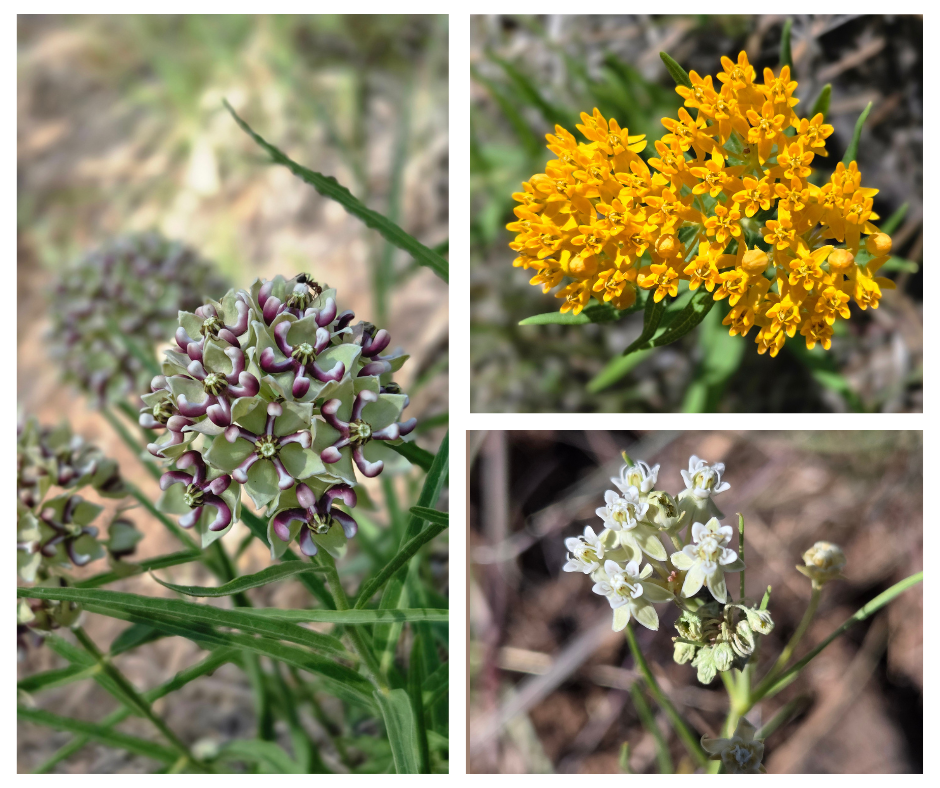
Antelope Horn Milkweed, Butterfly Milkweed and Poison Milkweed
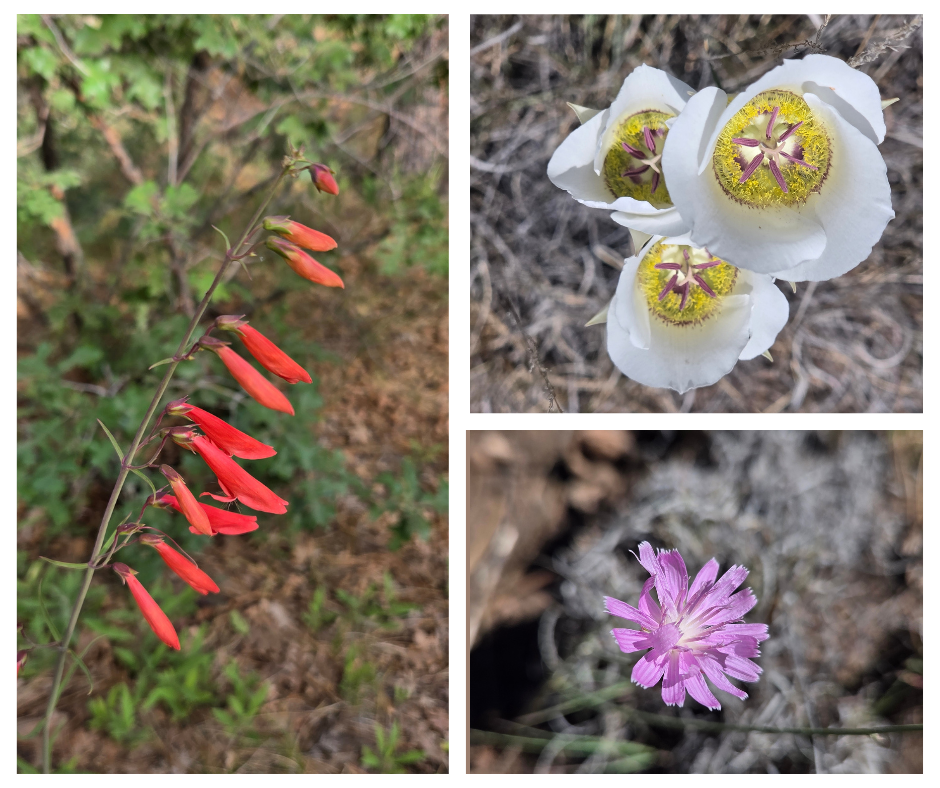
Firecracker penstemon, doubting mariposa lily, silvery rock lettuce
“You’re my favorite hiking partner,” I said, as I jogged to catch up once more. “I’m glad we decided to do this.”
Kevin laughed. “This is day one. Less than one percent of the trail. I’ll remind you of that on the upcoming hard days.”
I joined his laughter. He was right. Not all days would be like today, filled with newness and wonder.
Forty-five years ago, we didn’t know what awaited us. We are equally clueless of what we will find on the trail in the days ahead.
I took a swallow of water and matched my husband’s pace, walking beside my favorite person wearing his favorite red shirt.
We took one more bend on the trail. Together.
A good place to be. On a red-letter day.
Hiking Stats. First Day of AZT.
June 21, 2026. First Day of Summer. Father’s Day.
8:00 to 11:00 am. Sunny day. Started at 52 degrees. Ended at 85 degrees.
*Part of Section 31. Only 2 miles of the 6.2-mile loop was on the AZT, but completing this hike will make a future section shorter and easier. Besides, we had the hike planned before we decided to start the AZT! Loop Hike: Carla Vista Campground to Sandy Canyon to Walnut Canyon to Fay Canyon to Carla Vista.
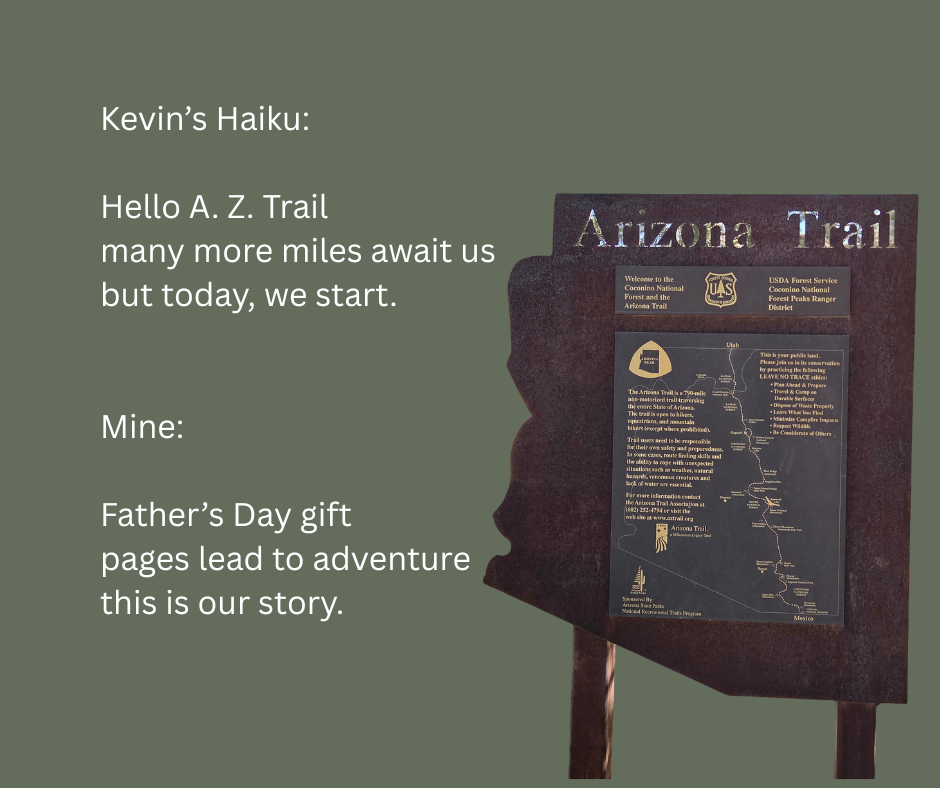
Haiku:
I’ve declared we will compose Haiku on each day on the trail. This is day one:
I brought the blog out of retirement to write about our AZT adventures. I will include links to new blog stories in my monthly newsletter, “Wonder*FULL.” To sign up to get that monthly correspondence, click here.