By Way of Mushroom Glen: Arizona Trail Day 9
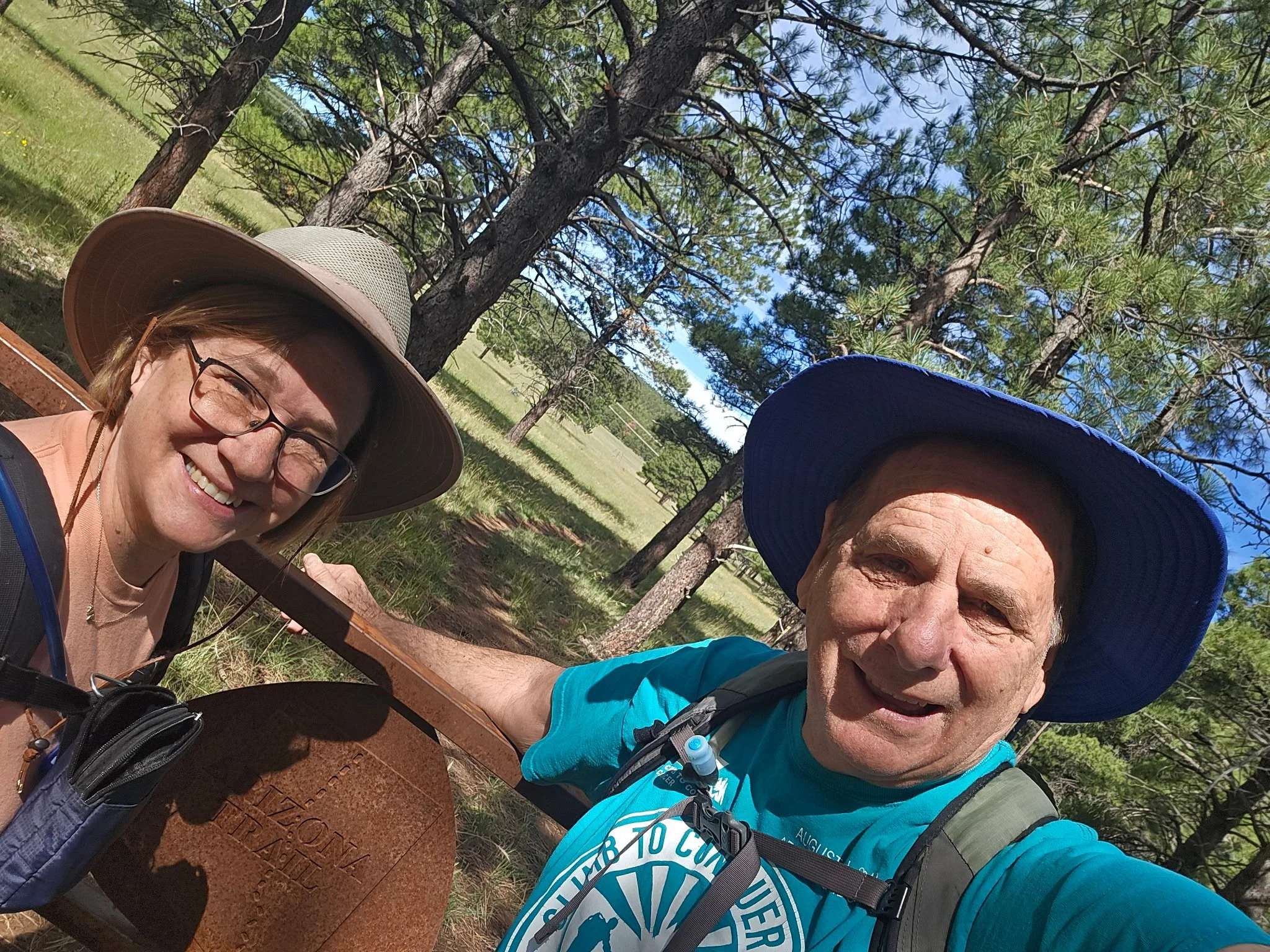
Day 9: Part of Section 28 on Sept 6, 2026
We hiked north in the Coconino National Forest in the shade of ponderosa pines, piñon, scrub oak, and juniper trees, interspersed with open grasslands. We passed three different earthen water tanks: Bargaman Park, Schuff, and Maxie, all with murky water. Bright green, northern leopard frogs dove below the surface when we stepped closer to investigate.
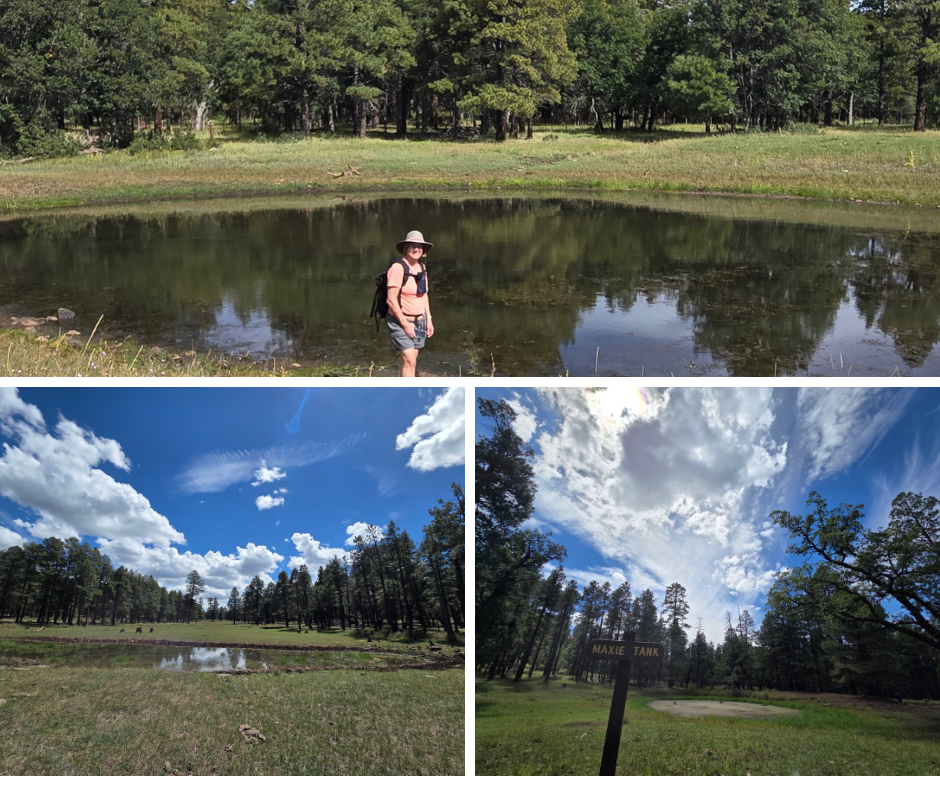
Note: Like all desert dwellers, I take water photos, even glorified mud puddles edged with cow dung. I cannot imagine being thirsty enough to purify the water and drink it. I hope I never need to test that theory.
After previous days on the trail, the absence of familiar sounds in the morning birdsong was noticeable. Migration season has begun. Birdcast (with Cornell Labs) estimated 344,200 birds were on the move last night over Coconino County, traveling overhead while we slept.
Ornithology is amazing.
While birds were lacking, wildflowers were not. Over twenty-five varieties lined the trails, the blooms still abundant after the monsoon rains. We passed stalks of purple lupine, magenta desert wishbone, and yellow broom snakeweed. But the winner of the day was the spreading fleabane, a small, daisy-like flower with delicate, fringe petals. The abundant flowers swayed as we passed plant after plant on flat and easy trails.
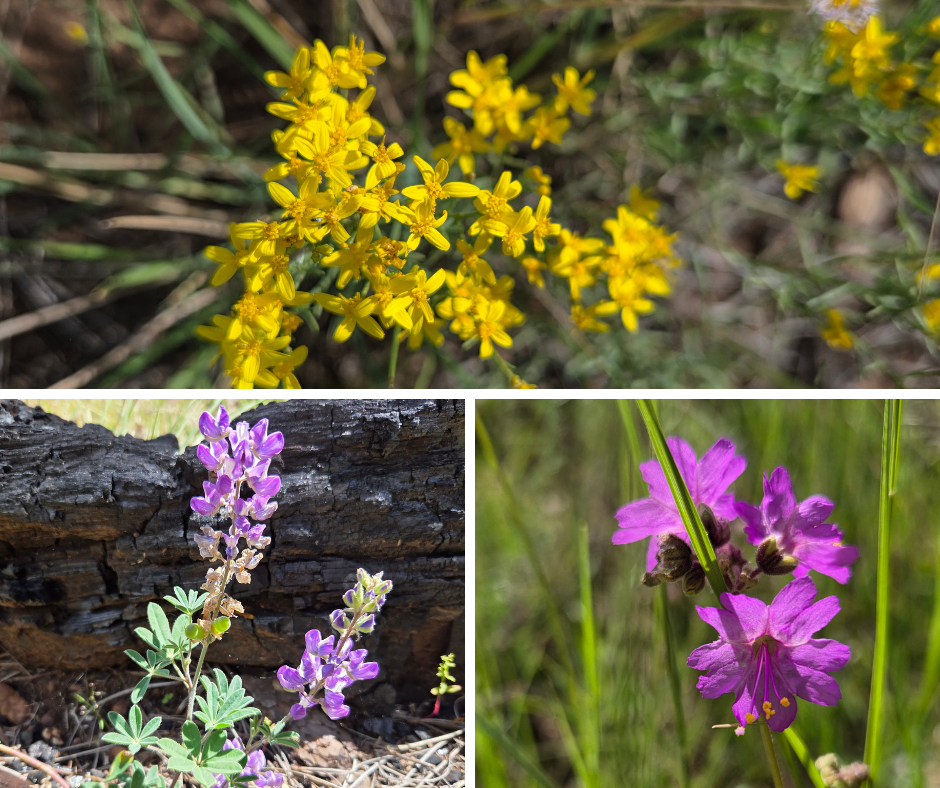
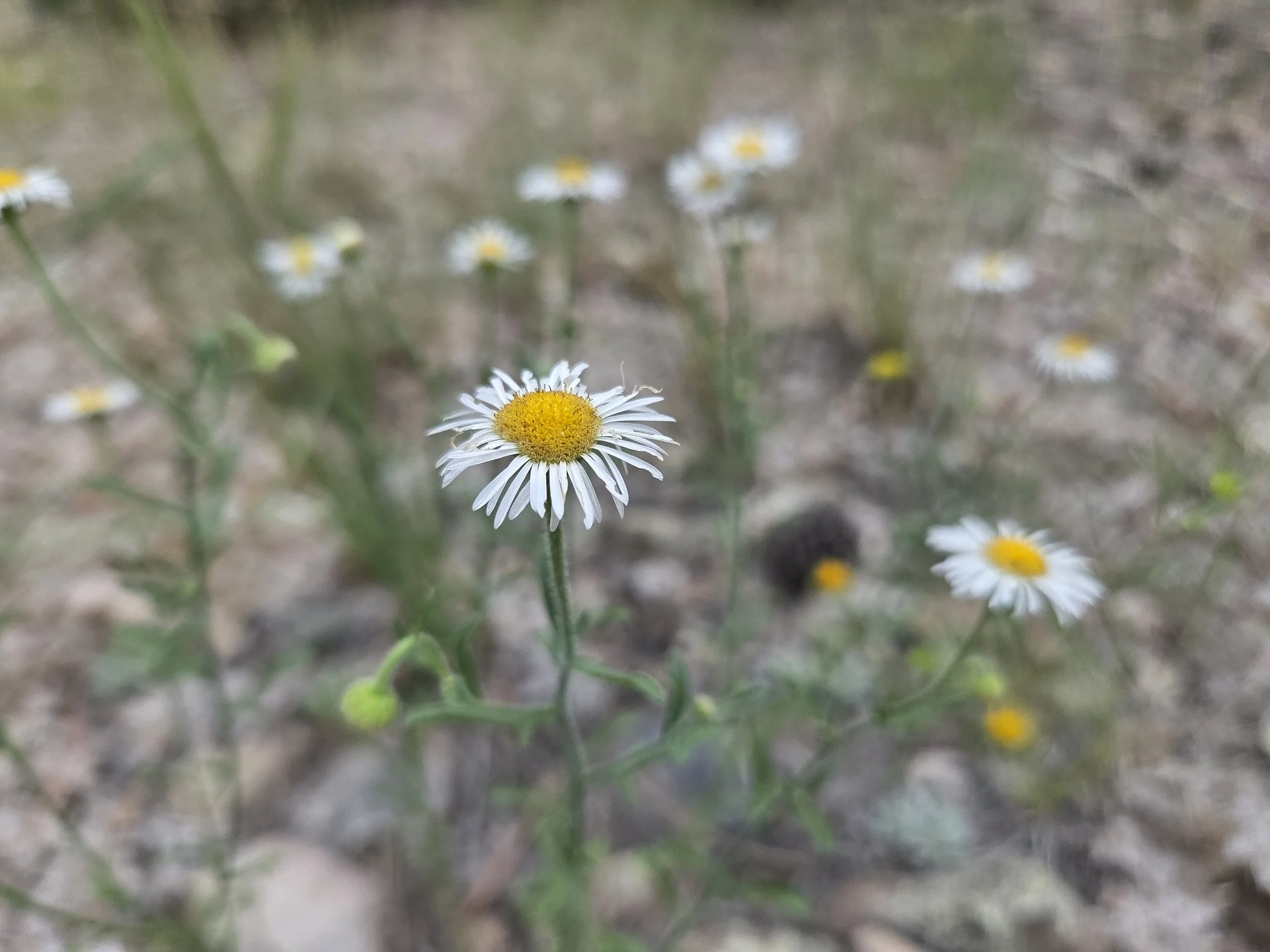
Birds. Flowers. All good.
But our eyes were on the lookout for mushrooms. Specifically, lobster claw mushrooms (Hypomyces lactiflurum). Not a true mushroom, the fungus forms when a parasitic mold infects a host mushroom and completely covers the host with a bright orange color. (Parasitic mold and fungus!!! Doesn’t that sound yummy?). The edible lobster claw has a dense and meaty texture with a mild, nutty and subtle seafood flavor. Foraging sites are closely guarded secrets among Mormon Lake locals.
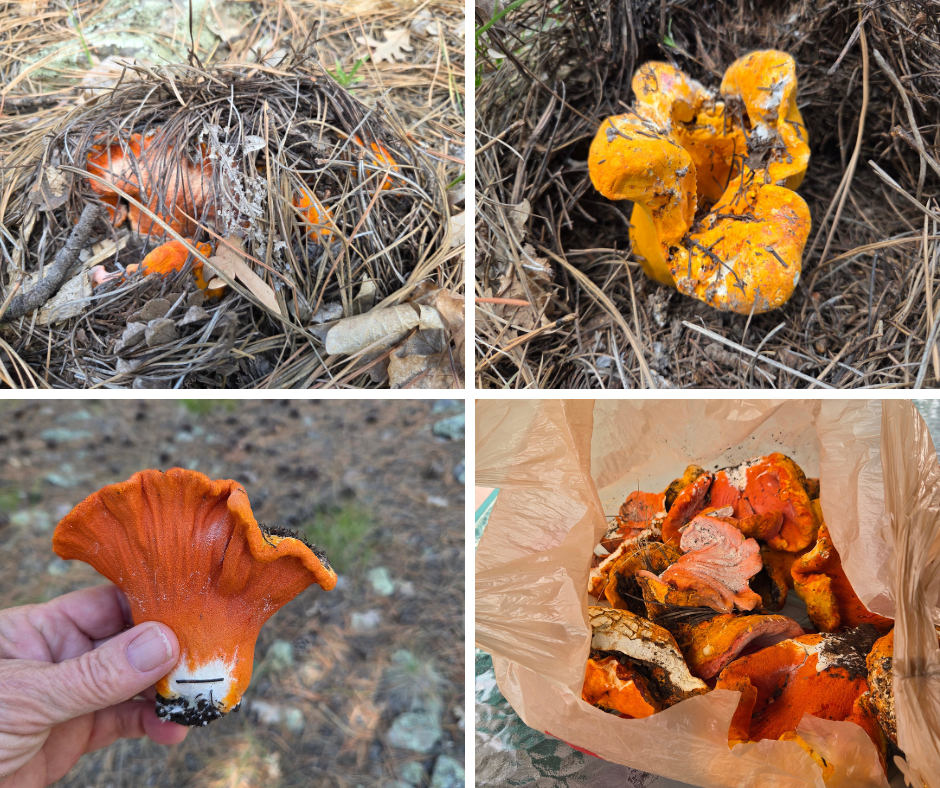
Note: This is where I give a disclaimer that you should not go picking mushrooms unless you know what you are doing, after having been educated by someone who knows what they are doing. Let’s avoid all trips to the ER, please.
“I see orange ahead,” Kevin said, pointing to a spot of color under a mound of ponderosa pine needles.
“A lobster claw!”
We pushed aside the pine needles to see if the mushroom was still plump and firm. Kevin snapped the shroom off at the base.
“Here’s another one!”
For the next several miles we hunted the lobster claws in the shade of the ponderosas, filling a plastic grocery bag, before loading them all into Kevin’s backpack.
A flutter of wings from a western bluebird led the way as returned to the trail after foraging. We walked over a rise, turned a bend, and entered a section of ferns on both sides of the path.
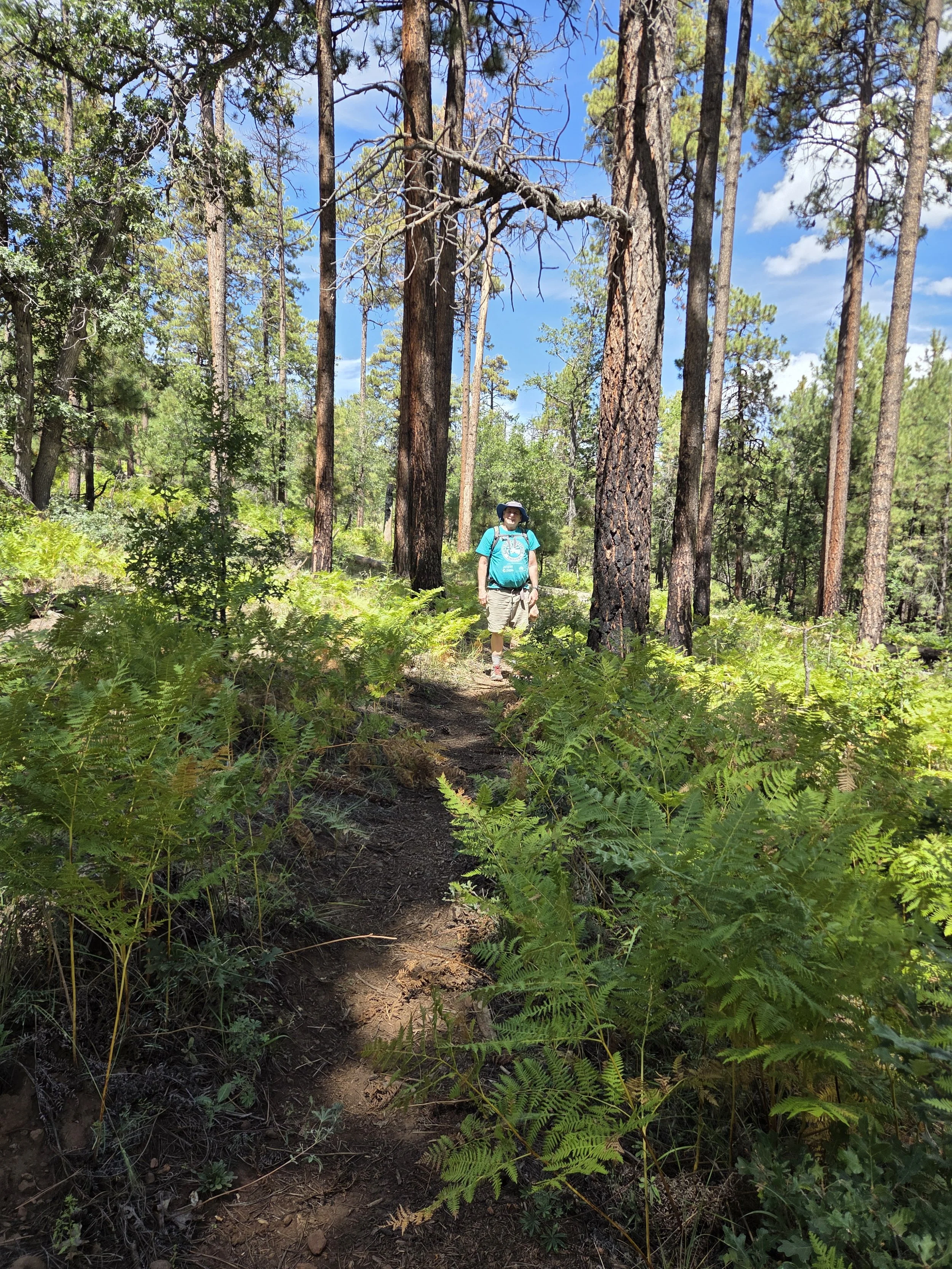
“This reminds me of the line from the movie, Elf,” Kevin said. He then quoted, “I passed through the seven levels of the Candy Cane Forest, through the sea of swirly-twirly gum drops, and then I walked through the Lincoln Tunnel.”
The line from the movie encapsulated Buddy the Elf’s childlike wonder as he entered the “real world” of New York City. It’s an example of literary genius in one sentence, a juxtaposition where two unlikely things are put together to make the audience/reader pause and think.
Which viewpoint was the more real? The North Pole or the big city? Was there room for both? What changes were about to happen?
“You could say we passed through Tarantula Kingdom, Fern Forest, and….” Kevin continued with his train of thought. His feet halted while he considered options. “We need a third thing.”
“Ponderosa Pines?” I suggested.
Kevin shook his head. “Something with mushrooms.”
“Mushroom Glen?”
Kevin nodded. “We passed through Tarantula Kingdom, Fern Forest, and Mushroom Glen,” he said.
“While hiking the AZT,” I concluded. Kevin was a prime example of the intersection of two worlds.
He had just returned from Taiwan, where he traveled with an Arizona delegation in his role as the mayor of Chandler. They met CEOs, company presidents, and dignitaries wanting to discuss mutual investments in our state. Yet, here he was, thirty-six hours later, joining me on the AZT picking mushrooms—a crazy juxtaposition, not that far removed from the North Pole and New York City.
But really, don’t we all live in this intersecting space, between the seen and the unseen? Where we juggle multiple worlds? Aren’t we all traveling through Candy Cane or Fern Forest, on our way to the next bend in the trail? Aren’t we all looking for bits of wonder that may turn out to be the most real of all?
“I think I see the car ahead,” Kevin said, pointing to a white vehicle visible between the trunks of ponderosa pines.
“When we get back, let’s clean the mushrooms for homemade risotto,” I said.
We loaded up our gear and headed to the cabin—by way of Tarantula Kingdom, Fern Forest, and Mushroom Glen on another section of the AZT.
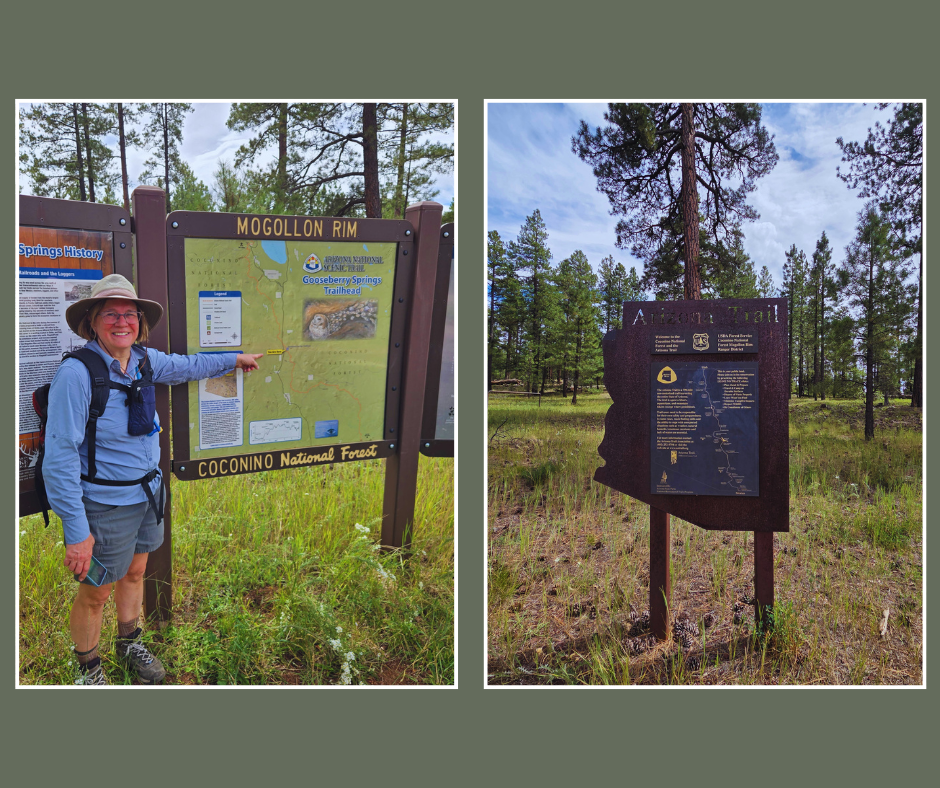
Hiking stats
Part of Section 28, “Happy Jack” section.
First car- parked six miles south of Mormon Lake turn where the AZT crosses Lake Mary Road. Second car - Turn east at mile marker 306 and FSR 294. We parked 5 miles down the road at the AZT crossing.
9:35 am – 2:15 am, with stops for foraging. 62 – 72 degrees. NOBO 9-10 miles. 23,340 steps.